
I recently found myself falling down a Reddit rabbit hole. Specifically, a thread with the somewhat brutal title: ‘Which one of you is to blame for all this fractional CMO nonsense?’.
It continues:
“Is there any industry that does more to jeopardize its own credibility and allow linkedinlunatics with no fundamental knowledge or skills to flood high level positions at major companies than marketing?”
Ouch.
I feel naturally defensive of the fractional CMO title because I’ve worked alongside some truly great ones within Growth Division, our growth marketing agency. And I believe in the fractional model: when done right, I think this is the future for not just startup and scale-up teams, but ambitious SMEs too.
But to be honest, I also understand where this post (and the many, many commenters underneath) are coming from: I’ve definitely also met my fair share of dodgy so-called ‘fractional CMOs’, and heard some real horror stories.
Most of the time, however, I think these bad situations are avoidable. Working with a good fractional CMO can be such a boost for startups – but only if they know what they want, vet carefully, and treat this person as part of their team.
Let’s unpack the role of the fractional CMO, and my advice for finding (and keeping) a good one.
When and why the role of ‘fractional CMO’ became a thing
Here’s a snapshot of how searches for ‘fractional CMO’ have evolved over the last 10+ years (this graph represents search volume in the USA). You’ll see vague murmurs from late 2015, with real growth kicking in in mid 2021.
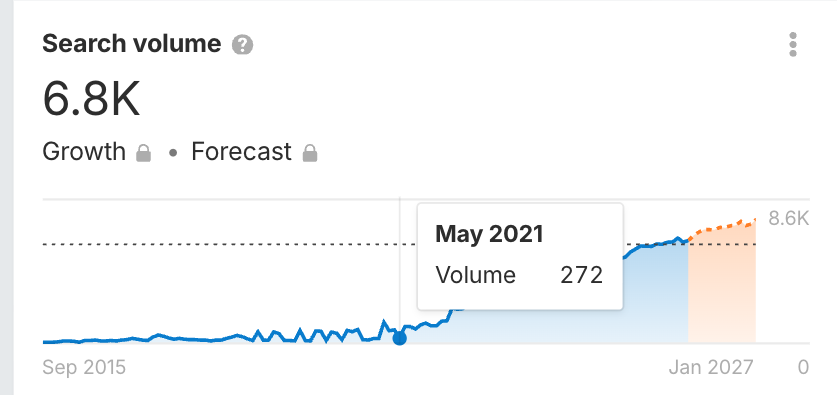
This doesn’t surprise me. The COVID pandemic changed how we think about working from home, and made fully remote teams a popular option for startups and small businesses, rather than an outlier.
And this was excellent news for self-employed marketers. No restrictions on location, and no concerns about meshing well with the team: everyone was Zoom-literate by this point.
The promise of the fractional CMO is a solid one: the expertise of a CMO, for businesses that can’t justify the cost yet. It sounds simple, and it can be exactly that. But all too often, the reality is a bit less cut and dry…
What I believe a fractional CMO should (and shouldn’t) be
One of the main critiques or confusions I hear when it comes to fractional CMOs is the idea that this is just a sparkly rebrand of existing roles that didn’t need it. Specifically: marketing managers and marketing consultants.
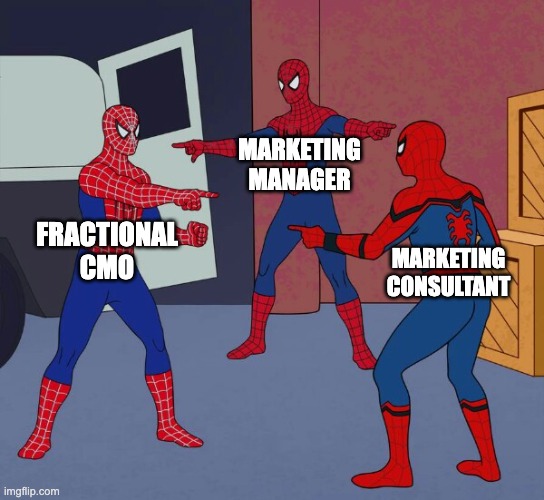
Here’s where I see the distinction between each of those roles:
- Fractional CMO: A highly skilled marketing leader, effectively working for you on a part-time basis (but as a contractor with flexible hours). They should either be leading your existing marketing team or come with their own freelance contacts ready to plug in. They’re big on strategy, but also do-ers, rolling up their sleeves and getting involved. They should feel like a true part of your team.
- Marketing manager: Someone who manages marketing for a business that may have lower marketing demands, or works under a Head of Marketing or a CMO. They may be working alone or with a small team.
- Marketing consultant: A consultant offers top-level strategy and support, either on a one-off or an ongoing basis. They’re less embedded within your team, and typically spend less time with or on your business than a fractional CMO.
But of course, the problem here is that this is ultimately just my interpretation. There’s no governing body, no prerequisite degree, and no rulebook; anybody can put ‘fractional CMO’ in their LinkedIn bio, no matter whether they’re a former CMO of a global brand, or just consider themselves ‘good with Instagram’.
It’s easy to see this as a self-employed problem, but it’s an industry-wide issue. How often have you seen a ‘head of’ role where the person hired will be the only one in their team? Job titles are, to my mind, increasingly meaningless. What matters is understanding the scope of the role you’re hiring for, communicating this clearly, and finding the right person for that role – no matter what its title, or their title, may be.
My fractional CMO red flags & some vetting advice
I feel qualified to wade in on this topic because I have worked with many, many fractional CMOs through Growth Division. Some made the cut and went on to become brilliant, trusted Growth Strategists within our freelance team.
Many more did not work out, either because of bad vibes from our opening conversation or poor performance during their trial. And we’re talking about people with really impressive professional backgrounds here: former CMOs, multiple-time founders, people with strong personal brands and big followings. Often, they were very skilled, but they hadn’t yet learned how to translate this into being an effective fractional CMO.
Over time, I’ve established some red flags to watch out for (and I also found a few more good ones in the depths of that Reddit thread…):
🚩 They don’t ask many questions. A fractional CMO should challenge you as well as collaborate with you. They should want to go deep into details, question assumptions, and really understand your product and what you’re trying to achieve. If they’re just nodding along, this is a bad sign.
🚩 They’re vague about results. Some people say ‘fractional CMOs’ should previously have held a ‘CMO’ position, and I don’t agree with this. But you do need to see concrete examples of how they have helped a business that’s at a similar stage to yours.
🚩 They talk a good talk. They speak more than they listen, and share big ideas without any realistic plan for how to achieve them. Their communication feels chaotic, and you doubt their ability to actually get things done.
🚩 They won’t commit a certain amount of time to your business. Many people will disagree with this one, but for a role with flexible deliverables, I think it’s important to get a sense of how much time this person is planning on committing to your brand. For me, around two days per week is about the right amount of time – you want this person to feel like a true part of your team, rather than someone who just drops in from time to time.
🚩 You don’t quite trust them, or you just don’t gel with them. This doesn’t necessarily reflect badly on the person in question, but it never bodes well for your working relationship. You need to be able to trust this person completely, communicate openly with them, and work closely alongside them.
How to work effectively with potential fractional CMOs
Like so many things in life, an effective working relationship with a fractional CMO comes down to good communication on both sides – both before and after you start working together.
First, you need to get very clear on what you actually want from this person. Here are some questions to ask yourself before hiring a fractional CMO:
- Are you looking for someone to do lots of the execution, or someone who is almost purely strategy-focused?
- Do you want this person to work with an existing team, oversee hiring a team, or come with their own freelance contacts to do the work?
- Do you want someone who approaches marketing from the brand narrative angle, or from more of a growth and performance angle?
- How much hands-on time do you need from this person?
- What does success look like? What should their KPIs be?
And once you’ve found the right person, my advice is to make the most out of your time together by:
- Trusting them. You hired them because you think they’re good, so let them do their job without interruption.
- Being receptive. If they challenge how things are done, how you’re tracking success, or what you’re working towards, take this as a good sign and be receptive to what they propose, even if you don’t go for all of it.
- Setting clear objectives together. Understand what success looks like in this role, and how you’re going to measure it.
- Finding an effective communication pattern that works for you both. Respect their boundaries and the ‘fractional’ nature of their role.
- Having an exit timeline in place. Good fractional CMOs know that it’s not a forever relationship, and should be happy to talk to you about the timeline for replacing them with a full-time hire.
📕 Up next: The 7 Best Fractional CMOs for Startups
Our Growth Strategists vs traditional fractional CMOs
At Growth Division, our Growth Strategists act as each client’s fractional CMO, account manager, and first point of contact all rolled into one. We have around 15 Fractional CMOs on our books and 120 more actively engaged via our networking group, Growth Circle.
They have all been carefully vetted by us, which I think is the most important distinction from regular fractional CMOs; you get a self-employed expert, with the approval stamp of an agency. You work with a brilliant individual who has their own unique strengths (that we’ve carefully matched to your business), but they also have the full support and expertise of a wider team behind them.
Our Growth Strategists work with you to set your marketing strategy, and they oversee and assemble your growth team of expert freelance channel managers from our network. They are startup enthusiasts and highly experimental. They will push boundaries and flex their creative muscles to find new ways to grow your business.
📕 Up next: What to Expect From Your First 90 Days (& Beyond) With Growth Division
Final thoughts
Most bad experiences with fractional CMOs come down to one of two things: bad communication and a bad vetting process. This is nothing unique; it’s why most roles have probation periods, after all.
If you can organise a similar ‘probation period’ with your fractional CMO, this could work well for both sides – as long as your expectations for that period are realistic.
And if you’ve had a great experience with a fractional CMO in the past, I’d love to know: what made the relationship work so well?
Considering hiring a fractional CMO? Book a 30-minute call with me to explore your options and hash out the pros and cons for your business. Book a call.



.png)
.png)