Every marketing agency wants to be your partner now. None of them want to be your vendor. Read enough pitch decks and the word starts doing more work than the model behind it.
Founders keep asking what actually separates a growth partner from an agency. It's a fair question, and most answers online dodge it.
This post gives a straight answer. I'll define the term properly, and show how it differs from an agency, a consultant, and an in-house hire. Then I'll cover the signals that tell you when you actually need one.
What "growth partner" actually means
Strip away the marketing language and a growth partner is simple to define. It's a team that owns both strategy and execution across multiple channels, and gets judged on revenue, not deliverables. That's a meaningful shift from how agencies have traditionally operated.
Even Forbes Agency Council has been telling agencies to make this shift. The advice: stop reporting on clicks and impressions, and start reporting on pipeline and dollars influenced. Tie your value to what the client's business actually needs to grow.
A traditional agency executes a brief. A growth partner helps write the brief, then executes it, then adjusts it as data comes in. The accountability sits with results, not activity.
That distinction sounds small. In practice, it changes who gets hired, how they get paid, and what happens when a channel stops working.
Where the term came from
The label borrows from venture and private equity. There, a "growth partner" is a senior investor who works alongside a company, not just funding it from a distance.
Marketing agencies picked up the phrase because it signals the same thing: embedded, invested, accountable. Not every agency using the term has actually earned it yet.
The label travels faster than the operating model behind it. That's exactly why it's worth defining carefully before you buy into it.
The same drift happened with "growth hacking" a decade ago. A useful, specific idea got applied to almost any campaign, and the term stopped meaning much on its own.
"Growth partner" is heading in the same direction. That's exactly why the underlying model matters more than the word choice on a homepage.
How to raise this in a first sales call
Most agencies won't volunteer whether they're structured as a growth partner or not. It's worth asking directly, early in the conversation.
Try this: "Is any part of your fee tied to a specific outcome, like customer acquisition cost (CAC) or qualified pipeline?" The answer tells you more than the pitch deck will.
A confident yes, with specifics on what outcome and how it's measured, is a strong signal. A yes that turns vague under a follow-up question usually means the answer was aspirational, not structural.
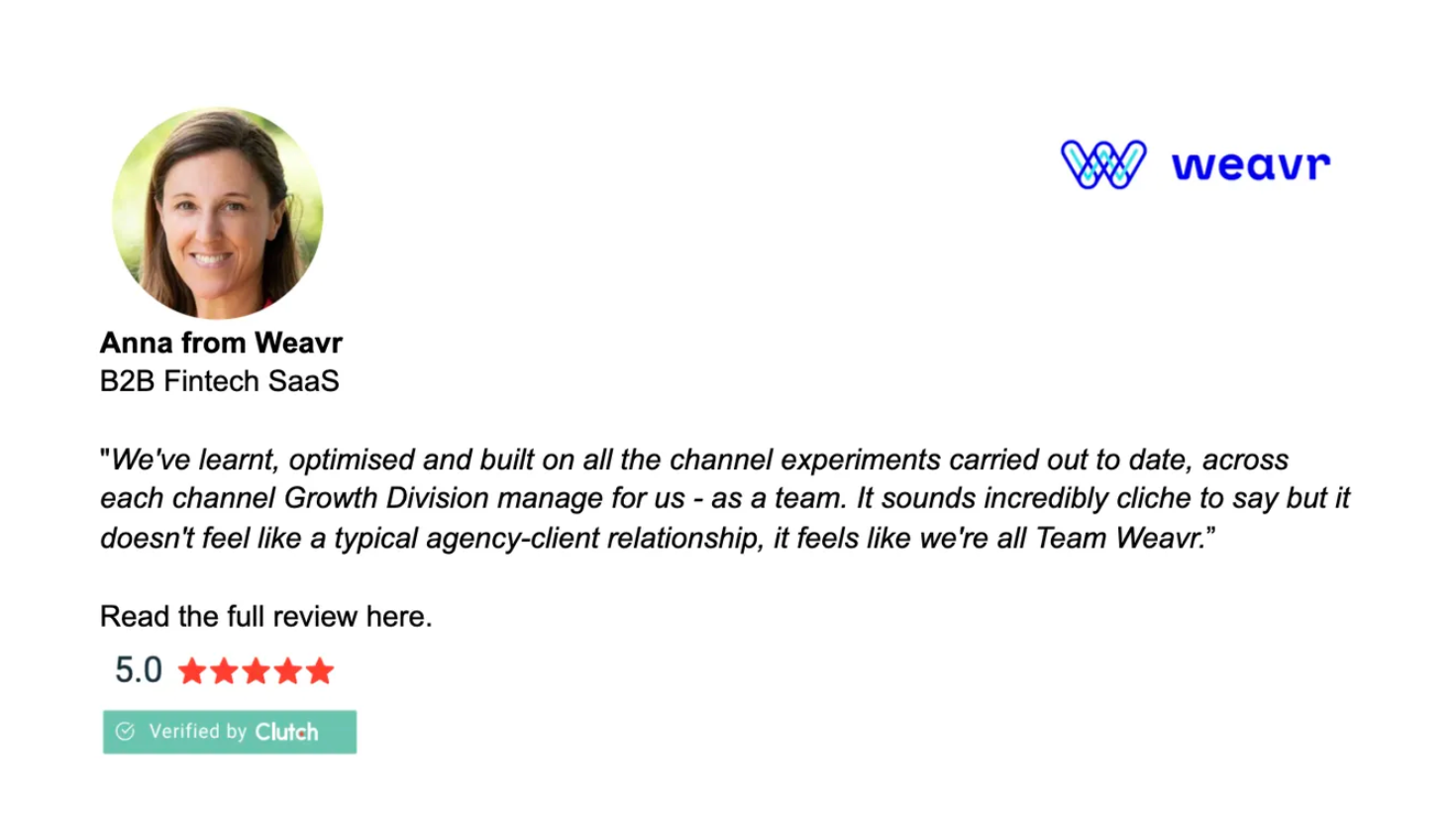
You can also ask the agency for testimonials from clients who have openly stated the level of collaboration and integration they have had. If they can’t provide any, it’s likely not true they are act as a growth partner.
What a growth partner actually does
In practice, the role covers more ground than a single-channel specialist and more depth than a part-time advisor. Here's what that typically includes.
- Diagnoses the actual growth constraint. Before recommending a channel, a growth partner figures out whether the problem is acquisition, activation, retention, or pricing.
- Builds the go-to-market strategy. That includes the ideal customer profile (ICP), channel hypotheses, and the sequence for testing growth marketing strategies.
- Executes across channels, not just one. Paid media, content, SEO, email, and outreach are all fair game, brought in based on what the data shows.
- Reports on revenue, not activity. Pipeline, CAC, and revenue influenced replace traffic and impressions as the scoreboard.
- Adapts the team as results come in. If a channel isn't working, the mix changes. There's no incentive to keep running a service that isn't producing.
Miss any one of those five and you're likely looking at something else with a new label. Usually that's a specialist agency, or a strategy consultancy that stopped short of execution.
How a growth partner engagement typically unfolds
The shape of the engagement is what actually separates a growth partner from a rebranded agency. It tends to follow a consistent arc.
The first two to four weeks are diagnostic. That means mapping the ICP, auditing what's already been tried, and building a ranked list of channel hypotheses.
Nothing gets spent during this phase. The point is a documented hypothesis for each channel, not a campaign already live.
Weeks four through twelve are experimentation. Each channel hypothesis gets tested on a defined timeline with a specific success metric, not run indefinitely on faith.
By month three, the pattern is usually visible. One or two channels show real signal, and the team shifts weight toward them while cutting what isn't working.
What this looks like for a B2B SaaS startup
Picture a seed-stage B2B SaaS company with 15 early customers and no clear channel yet. A growth partner would start by mapping the ICP against those accounts, looking for patterns in how they were acquired.
From there, two or three channel hypotheses get built, LinkedIn outbound and content SEO, for example. Each gets a defined test period, and budget stays modest while they're being tested.
By week eight, one channel is usually pulling ahead. Resource shifts toward it, while the team keeps a smaller test running elsewhere in case the picture changes.
That's the pattern across most engagements, adjusted for the specific product and buyer. The shape rarely changes, even when the channel that wins does.
What happens if it doesn't work out
Not every growth partner engagement produces a scalable channel in the first quarter. That's a real possibility worth planning for before you sign anything.
A well-run engagement treats a failed hypothesis as useful data, not a wasted quarter. You learn what doesn't work, and that narrows the search for what does.
The bigger risk is a partner who keeps running the same failing channel without saying so. Ask upfront how they'd tell you a hypothesis didn't pan out, and how quickly.
Flexible terms matter here more than almost anywhere else. A long notice period or an exit penalty quietly weakens the incentive to be honest about what isn't working.
Growth partner or fractional growth team, is there a difference?
Not much of one, in practice. "Fractional growth team" describes the staffing model, part-time specialists assembled around your needs. "Growth partner" describes the accountability model, ownership of outcomes rather than deliverables.
A well-run fractional growth team usually operates as a growth partner would. The terms overlap enough that founders shouldn't get hung up on which label an agency uses.
What matters is whether the accountability and the execution both show up. The label is far less important than the structure behind it.
Growth partner vs. growth agency vs. growth consultant vs. in-house hire
These four models get used interchangeably, and that's where founders get into trouble. Each one solves a different problem, and picking the wrong one is expensive. Here's how they actually differ.
The consultant and the agency solve opposite halves of the same problem. A consultant tells you what's wrong. An agency executes what you already decided to do.
A growth partner is what you get when you fuse those two halves into one accountable team. That's the appeal, and also the catch. Not everyone using the term actually delivers on both halves.
What it costs
Pricing varies more than founders expect, mostly because "growth partner" gets applied to different operating models. A solo advisor charging by the hour and a full embedded team charging monthly both use the label.
A structured engagement, strategist plus a small execution team, typically prices like a fractional growth team. Expect roughly £1,000 per channel specialist a month.
Add £2,000 to £3,000 for the strategist role, and most full teams land between £5,000 and £10,000 monthly. That's more than a single consultant, and usually less than a full-time senior hire.
Salary, National Insurance, and months of onboarding time push the in-house option higher once it's all counted. The cost question matters less than the accountability question, though.
Startup failure is common, and running out of money is the single biggest reason why. Paying for outcomes rather than activity is the whole point of the model.
Signs you actually need a growth partner
A growth partner isn't the right fit for every stage or every problem. These signals tend to point toward it.
- You don't know which channel will work yet. You have a product and some early traction, but no validated channel to scale.
- You've been burned by channel bias before. A specialist agency kept recommending its own service regardless of what the data showed.
- You can't afford a full-time hire, and don't want to guess which one to make. The skill set you need today might be wrong in three months.
- You want one team accountable for the whole funnel. Coordinating a consultant, a freelancer, and an agency separately is its own full-time job.
If two or more of those describe your situation, the model is worth exploring seriously. If none of them do, you probably need something more specific.
When a growth partner is the wrong fit
The model isn't universal, and it's worth being honest about where it falls short.
Pre-product or pre-traction. A growth partner can't manufacture product-market fit. There's no data yet to diagnose, and no channel signal to build a hypothesis around.
You've already validated a channel and need volume. Depth in a proven channel usually beats breadth across several once it's working. A specialist agency or an in-house hire tends to outperform a generalist team here.
You need daily, in-person leadership over a growing team. A growth partner is embedded, but not usually in the building every day managing junior staff. Above a certain headcount, that role needs to be full-time.
Red flags: when "growth partner" is just a rebrand
The term is loose enough that plenty of agencies have simply changed the word on their homepage. A couple of questions expose that quickly.
Ask what they're accountable for if a channel doesn't perform. A real growth partner has an answer beyond "we adjust the plan." A vague answer usually means the pricing and incentives haven't actually changed underneath the new label.
Ask whether execution changes based on results, or whether it's the same monthly deliverables regardless of what the data shows. A rebranded agency keeps running the same playbook. A genuine growth partner changes what it does based on what's working.
What good actually looks like
Not every self-described growth partner delivers what the label promises. A few questions separate the real ones from a rebranded agency.
- Do they own a number, or just a deliverable? A real growth partner ties part of their engagement to a specific outcome, like CAC or qualified pipeline.
- Will they tell you what not to do? An unbiased partner should be able to name a channel they'd actively avoid for your stage.
- Do they execute, or just advise? If the answer stops at a strategy deck, you've found a consultant wearing a growth partner label.
- How fast can they change direction? Ask what happens when week three shows a channel isn't working. The answer should involve a specific process, not a vague promise.
Where this fits at Growth Division
Worth flagging: Growth Division, our growth marketing agency, is the model we're describing below. We built it, so weigh what follows accordingly.
A channel-agnostic Growth Strategist owns the go-to-market strategy, and vetted channel specialists execute against it. The team gets swapped based on what the data shows, not on what's easiest to keep running.
Every engagement starts with a Bullseye Call, a structured session mapping the ICP and channel hypotheses before any budget moves. The process runs on GREX, Growth Division's own AI growth operating system. It tracks every experiment and keeps the team working from the same data, rather than five separate spreadsheets.
We've worked with 130+ startups across the UK, US, and Europe, with a 4.7 rating on Clutch from 31+ reviews. That's not proof the model is right for your specific business. It's evidence the model works often enough to be worth a conversation.
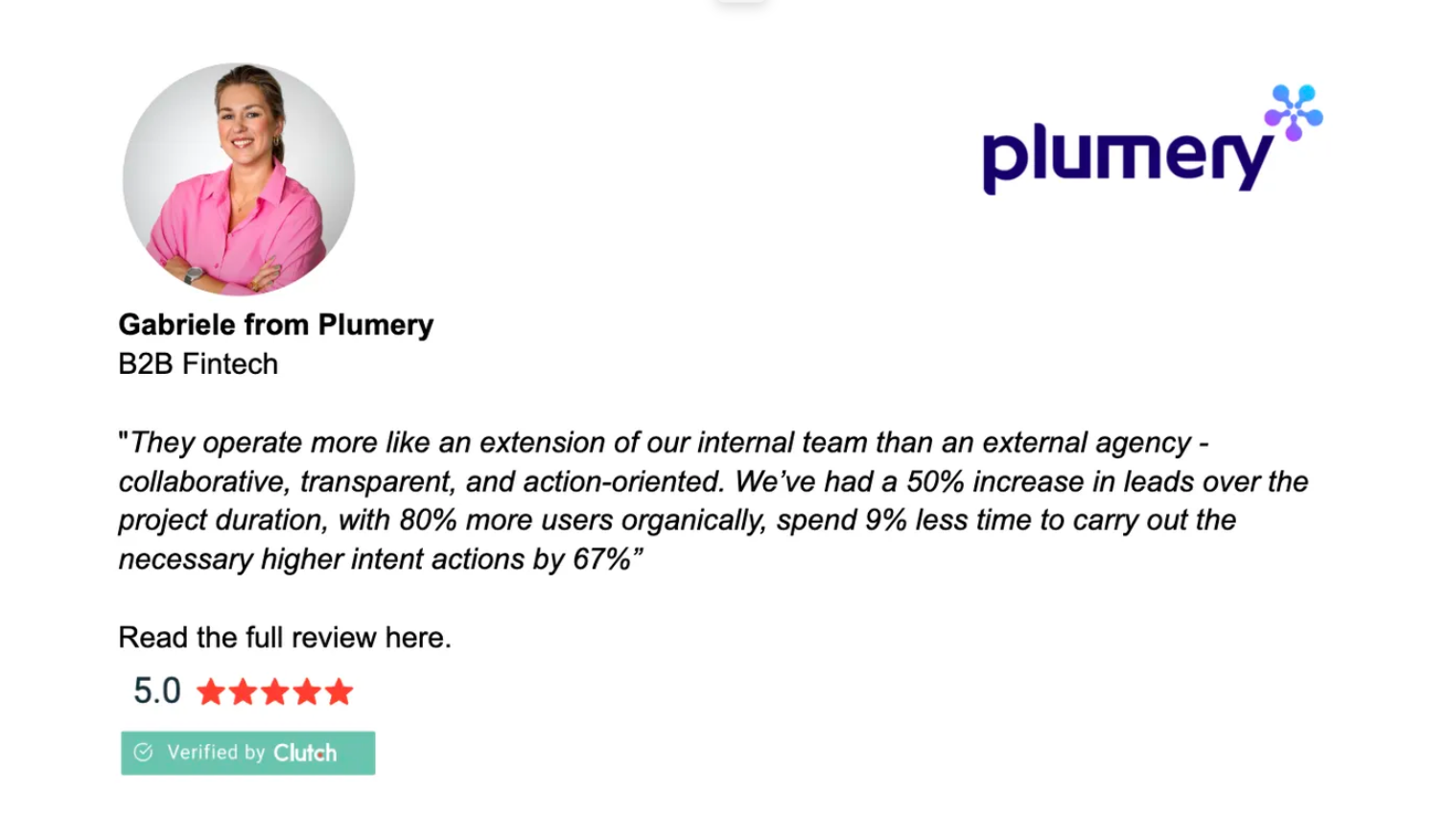
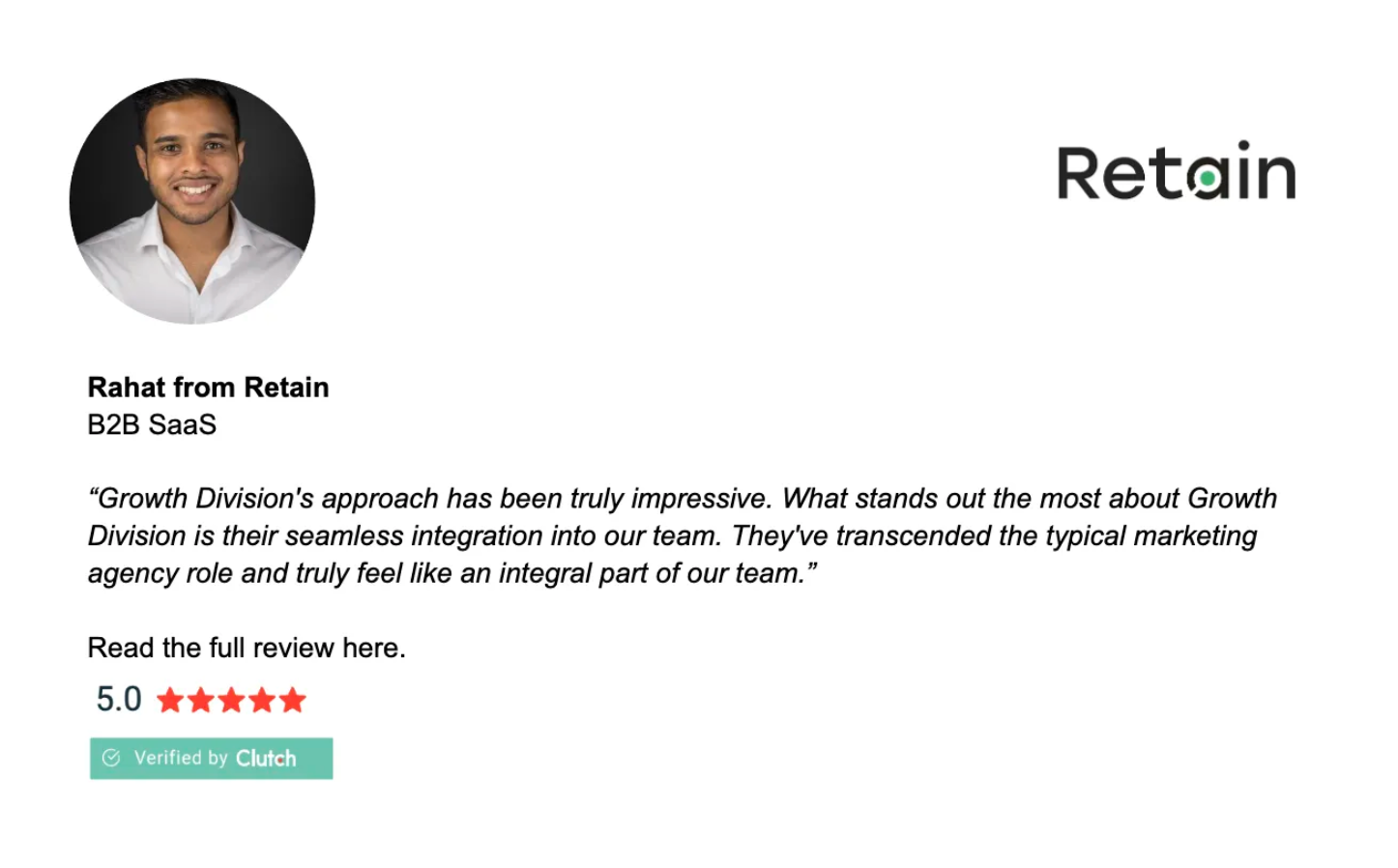
Plus it’s abundantly clear from what our clients say Growth Division acts more like a partner than a third party agency, see some of our clients talking about this…
Frequently asked questions
Is a growth partner the same thing as a fractional CMO?
No. A fractional CMO provides strategic leadership without an execution layer beneath it. A growth partner owns both strategy and the channel execution that follows it.
Do growth partners take equity instead of fees?
Some do, particularly in earlier-stage or advisory-heavy arrangements. Most operate on a cash retainer tied to deliverables or outcomes, similar to an agency fee. Ask directly rather than assuming either model.
How is a growth partner different from a board advisor?
A board advisor gives input at a distance, usually a few hours a month. A growth partner is embedded in the day-to-day work, running experiments and adjusting the channel mix weekly.
Can a growth partner replace my entire marketing function?
For an early-stage startup, often yes. Once you're scaling a validated channel at real volume, most companies bring execution in-house. The partner then shifts to strategy or overflow capacity.
What size startup is too small for a growth partner?
Pre-product or pre-revenue companies usually aren't ready. Without a customer base or an early traction signal, there isn't enough data yet to build a hypothesis against.
How long does it take to know if a growth partner is working?
Most engagements produce useful signal within 60 to 90 days, even if that signal is a channel that doesn't work. Judge it sooner than that and you're reading noise, not data.
Does a growth partner work for B2C as well as B2B?
Yes, though the model shows up most often in B2B tech. Channel mix and buying cycles there are usually complex enough to genuinely need a strategy layer. B2C companies with several viable channels benefit from the same channel-agnostic approach.
Is "growth partner" just a rebrand of "growth hacking agency"?
Sometimes, but not always. Growth hacking tends to describe fast, low-cost experiments in isolation. A growth partner runs experiments too, but ties them to a structured strategy and full accountability for the outcome.
Conclusion: match the label to what's actually being delivered
"Growth partner" is a useful term when it's backed by a real model, and an empty rebrand when it isn't. The difference is whether the team owns outcomes or just delivers activity.
Ask what they're accountable for before you ask what they cost. That single question filters out most of the noise around this label faster than any case study.
Not sure whether your startup needs a growth partner, a consultant, or something else? It's worth a conversation before you commit budget either way. Book a Bullseye Call with Growth Division, our growth marketing agency, and we'll help you find the right fit.

.png)

.png)