Key takeaways
- We made GEO our main marketing focus for this year. Now, it’s our main source of new discovery calls.
- We executed a mix of off-page and on-page changes to boost our GEO results. It helped that we’d already invested heavily in SEO and content marketing over a number of years, so our website was already in a strong place.
- Our next focus is redesigning the blog and systemising content refreshes. Content freshness is key for AI citations, so this will be key to maintaining these results.
As we started to rely more on AI tools for day-to-day research, we knew our prospects would be doing the same.
So this year, GEO became our main marketing focus. Not only to stay visible to prospects, but to really understand how this channel worked, and to be sure we could deliver it well to new clients, who were increasingly curious about this service.
The numbers showed us that our efforts were paying off, albeit not always in a completely linear direction. But more satisfying was getting on discovery calls with prospective clients who actually said things like “I found you through ChatGPT. We figured if you can get yourselves recommended there, you can do the same for us”.
In this post, I’m going to outline the key steps and investments that got us to this point. Some are relatively quick fixes, but many of them aren’t. We worked on GEO consistently across 8 months or more, running growth experiments and investing in support from channel experts to get to where we are today.
📕 Up next: Our Growth Experimentation Process Explained
The results so far
As it currently stands:
- GEO is our #1 acquisition channel for driving discovery calls and new clients (we measure this by asking prospects how they found us during discovery calls)
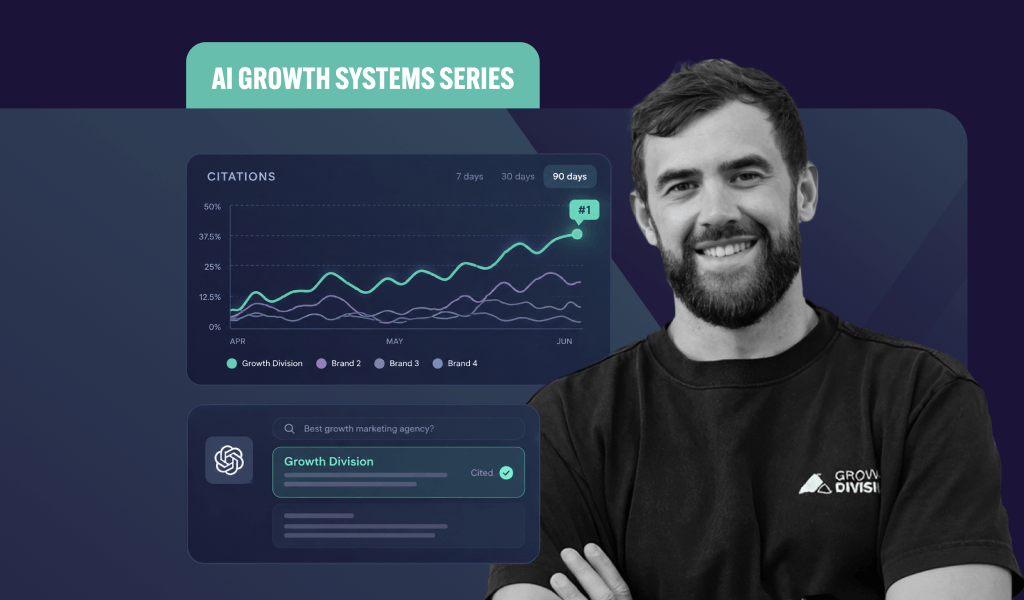
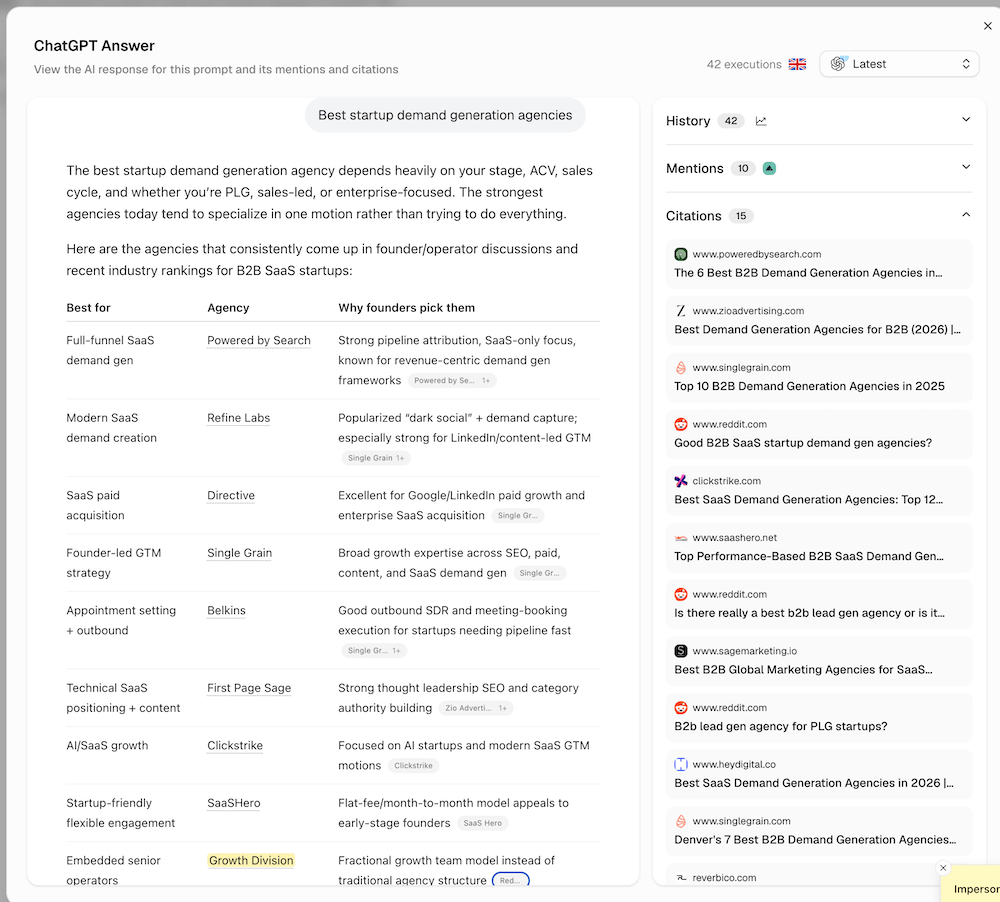
- We’re the #1 most-cited domain in our category (currently ahead of Reddit and YouTube)
- Our domain accounts for ~14% of all citations across the growth-agency questions we track
Here’s how we made that happen.
A quick note on our initial SEO standing
We’ve invested in SEO and content marketing since we launched Growth Division, publishing regularly to our blog, building backlinks (actively and passively), and developing our own personal brands on LinkedIn. We’ve worked with our own channel experts, including Lorenzo and the Brick Digital team, to help us make significant progress in these areas.
Ahrefs had our Domain Authority at 35 at the start of this push (Jan 2026), and then at 41 by September 2026. This is a pretty strong place for a 6-year-old site to be, and it means we are considered an authority in our space.
GEO and SEO are different channels that require a different strategy, but when it comes to choosing trustworthy sources, there’s still overlap. A well-established website with hundreds of backlinks and a regular posting schedule would be seen as more authoritative than a new website carrying out the same GEO strategy. We had a relatively strong base to work from.
That being said, we’ve now worked on GEO for 20+ websites, and we’re finding that a strong domain authority isn’t a prerequisite to doing well. With a clever, long-tailed strategy and hyper-targeted outreach and backlinking, startups can rank on LLM search far quicker than traditional SEO campaigns.
Choosing GEO tools & setting goals: our current stack
Before we invested significant time and resources into our GEO, we sorted out proper tracking.
We needed tools that would allow us to:
✅ Establish our GEO baseline to test and build from
✅ Understand where our visibility and sentiment sat compared to key competitors
✅ Support gap analysis and strategy development
The 3 GEO tools we use
We currently have four tools tracking our GEO progress and shaping our strategy:
- Peec AI, which we rely on the most for citation data, share of voice analysis and content gap analysis. This has been our go-to tool for most of the year, and its recommendations seem to generate results. They’ve just launched an agent feature too, which looks exciting
- Airefs, which we’ve used to develop a GEO content strategy around the keywords we already know perform well for us through SEO. We started working with Airefs in April, and we’ve been super impressed with it.
- HubSpot’s new AEO tool, which we started using when it was released in the summer (we already run our CRM through HubSpot). This covers many of the same metrics as Peec AI but produces slightly different numbers, so we’ve found it a useful one to cross-reference against data from the other two tools.
- GREX AI's GEO system. As we develop our agentic capabilities within GEO, we built our own app and system within GREX AI. It leverages the insights and analysis from the three apps above and cross-references this with the data for the SEO API. This brings all the insights under one roof.
Having four tools is kind of overkill. But we’ve tested over 10, and these are our favourites and the ones that seem to work. While the technology is new and shifting often, being able to triangulate data across three different platforms has actually been really valuable.
At the moment, we pull weekly tracking data from Peec AI, and monthly data from HubSpot. The findings and actions feed into a daily Slack update and GREX AI for our growth team to manage.
The key GEO metrics we track
- Citation rate. How often are we cited by LLMs and AI overviews (with a link included, not just a mention), and which pages specifically are cited?
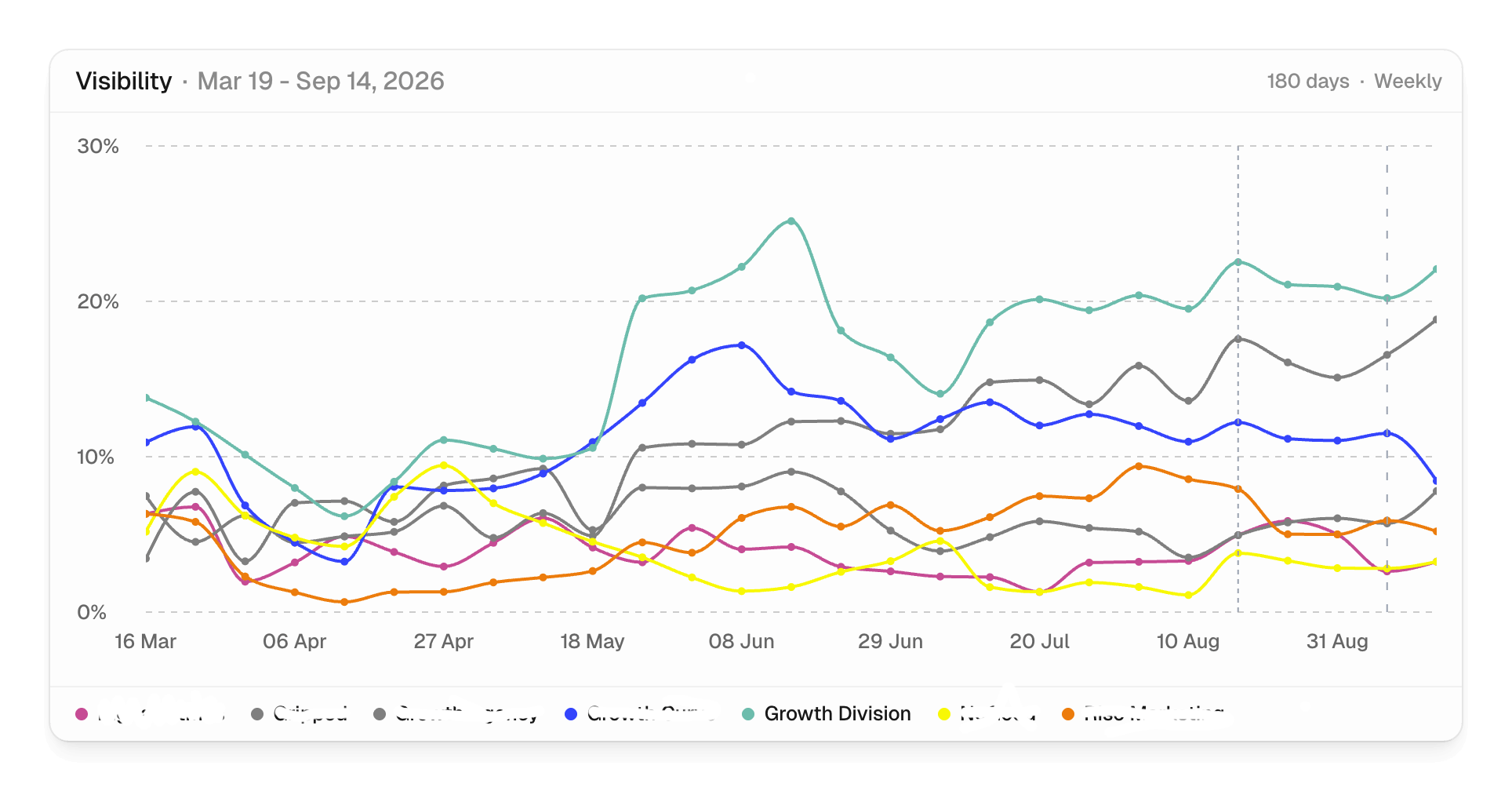
- Visibility (%). How often are we mentioned and cited versus competitors for our chosen prompts?
- Sentiment. How positively do LLMs talk about us?
- Discovery calls from GEO. How many people booked a call with us because of a recommendation from an LLM or AI overview? (We collect this data manually by asking prospects how they heard of us when they join a call).
Once we had tracking in place and a sense of how we benchmarked against competitors, we started running growth experiments.
If you’re enjoying this post, you’ll love Thoughts on Growth, our monthly newsletter sharing:
⭐ How we’re tracking against our own North Star Metric here at Growth Division
🎯 One growth channel insight
📖 One growth resource we rate
💡 One growth experiment we ran for ourselves or our clients, and the results
Off-page changes: appearing in cited sources
A lot of GEO advice I see focuses on what you can do for your own website. But this misses an important point: 85% of brand mentions come from third-party pages.
This is a crucial deviation from classic SEO strategy. You can get a comparison page (e.g. ‘best growth marketing agencies’) to rank well on Google, even if you feature your own brand within it (although it’s still a delicate balance of trust – more on this later).
LLMs don’t tend to operate like this, and only look to trusted third-party sites and social media channels for brand reviews and recommendations.
This is where we concentrated our efforts first, because it concerned our ‘money’ keywords (or ‘bottom of funnel’ keywords). In other words, the type of questions prospects are asking when they’re ready to start working with an agency and are looking for the right one for them. ‘What are the best growth marketing agencies in London?’ would be a good example.
Collaborating with third-party sites
We quickly realised that getting Growth Division to show up on the pages that LLMs were pulling these recommendations from was going to be a key part of our strategy.
We ran a gap analysis to work out which pages were being cited for our target keywords and didn’t yet feature Growth Division.
Where possible, we approached these sites for collaboration. This was a pretty manual process, proposing options on a case-by-case basis. Sometimes we provided a guest post for the partner site, or could spot another way to use our expertise and platform to benefit them, where we felt comfortable doing so.
We had to get creative in this stage to form meaningful partnerships, carefully aligning ourselves with platforms and creators we respected. It was slow but important work.
Reddit mentions
When carrying out the gap analysis above, we found several examples of Reddit threads being cited for these answers. We experimented with weaving Growth Division into the comments on these threads where it felt relevant.
We needed to tread carefully here. The Reddit community is wary of promotion and quick to boot out comments that don’t fit each community’s ethos (often speeding up this process with bots). Some of the threads we wanted to target were a moderation graveyard.
Our comments needed to add genuine value, then introduce Growth Division where it felt natural and welcome (i.e. where people had specifically asked for recommendations for a certain type of agency), and then not push too hard. And not include links, which seem to be an immediate red flag.
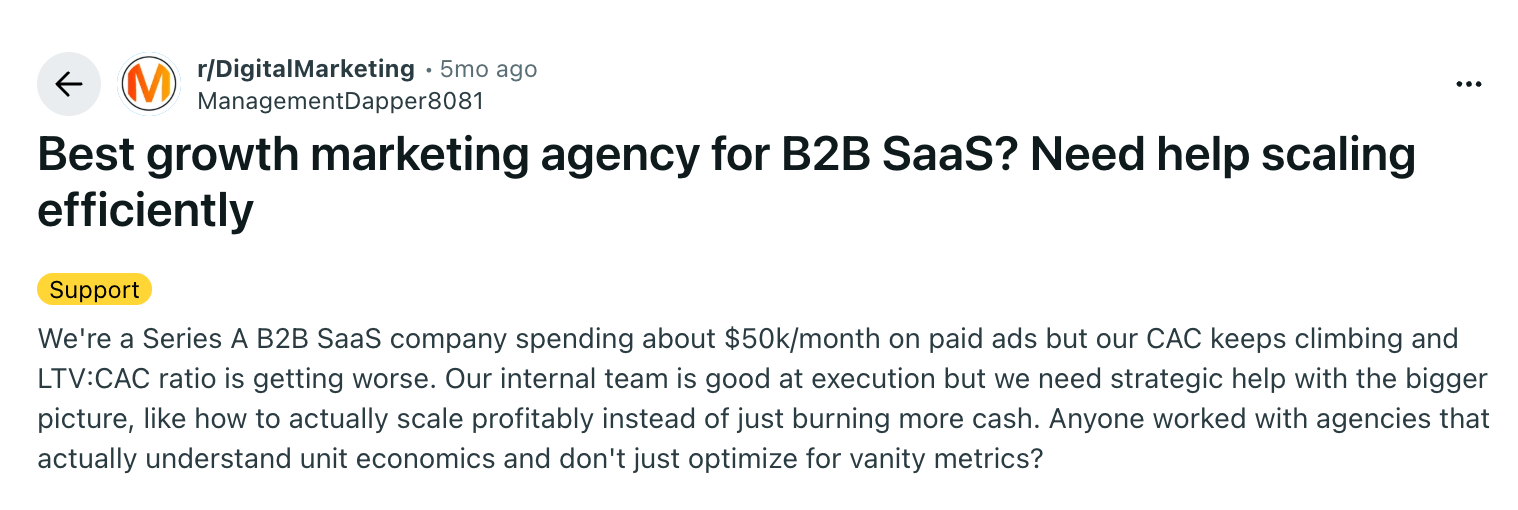
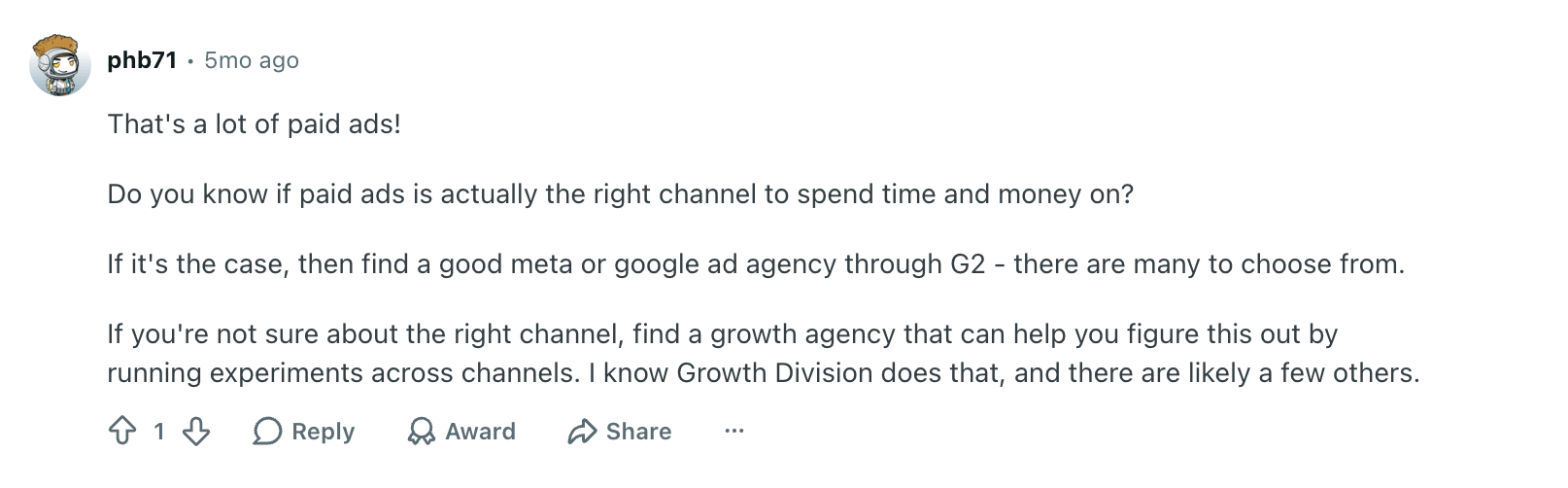
We tentatively contributed to a few key threads in this way. In May, we noticed signs of this starting to pay off.
On-page changes: creating new content & adjusting existing content
While we were carrying out off-page work, we were simultaneously making ‘on-page’ adjustments. In other words, we were changing parts of our website, tweaking our content strategy, and adjusting our publishing schedule.
Building new service-style pages
The blog has long been the domain of SEO. But early GEO research showed that additional landing pages can help AI platforms to better understand exactly what you do, where you do it, and who you do it for.
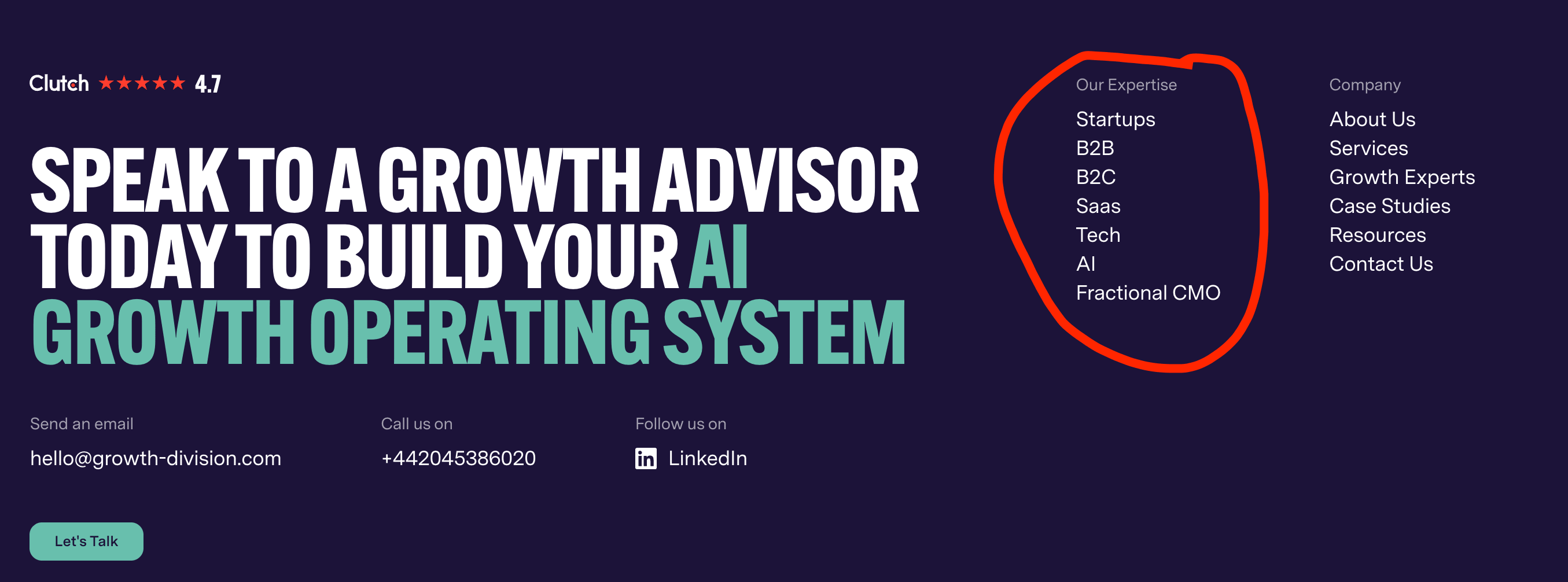
We created a set of pages that targeted our different markets and specialisms. And because these sit just one click away from the homepage, they’re easier for LLMs to find and crawl.
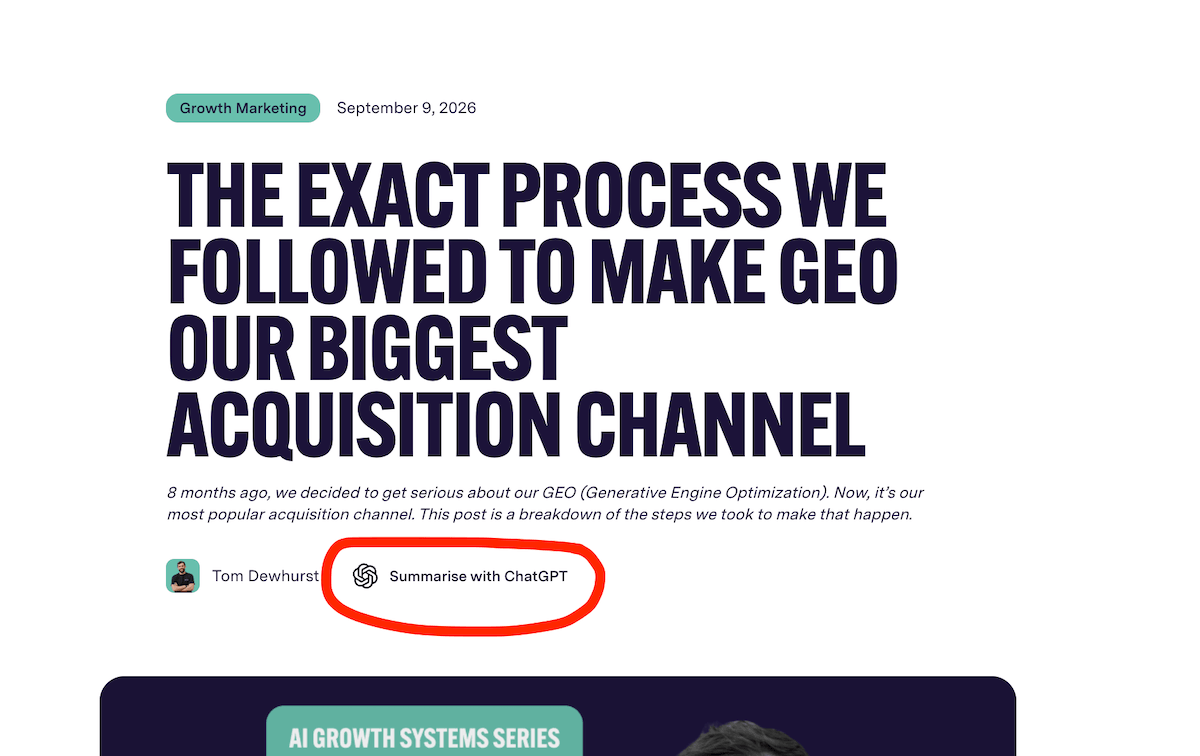
Adding a ‘Summarise with AI’ button to blog posts
Another ‘hack’ we tested was adding a button to ‘summarise with ChatGPT’. This gets a few clicks, and it can’t hurt to send traffic back to the LLM models. A bit of back-scratching goes a long way, even with AI agents.
Rewriting our case studies
In a similar vein, we worked with our fractional content expert to rewrite each of our case studies based on a list of requirements supplied by our SEO channel expert, Lorenzo Luiso.
If I could summarise these changes in one word, it would be: context. When potential clients use LLMs for agency recommendations, they add context – such as providing details about their exact situation, their business type and size, and the problem they’re looking to solve.
For these LLMs to then recommend us, we needed to spell out how we had supported similar businesses in the past, making sure the AI platforms could metabolise this information easily.
Key changes we made to our case studies included:
- Specifying the type of business we worked with up top, e.g. B2C/B2C, marketplace or ecommerce, pre-seed or Series A. This supports fast context anchoring, helping LLMs pick up on the similarities quickly.
- Unpacking the specific problem the company needed help with, and ending with the specifics of where we left them. This is about situational understanding, helping the LLM understand if the situational context is the same.
- Explaining the logic behind the strategy we chose, and how this evolved based on the data we received. LLMs like to see cause-and-effect reasoning, not just results.
- Also explaining why this client decided to work with us, and how our team was a good fit for their needs. This spells out to the LLM when it should, in turn, be recommending us.
- Adding a longer/better testimonial quote where we had one. This is all about improving trust in our case study and evidence of the outcomes we achieved.
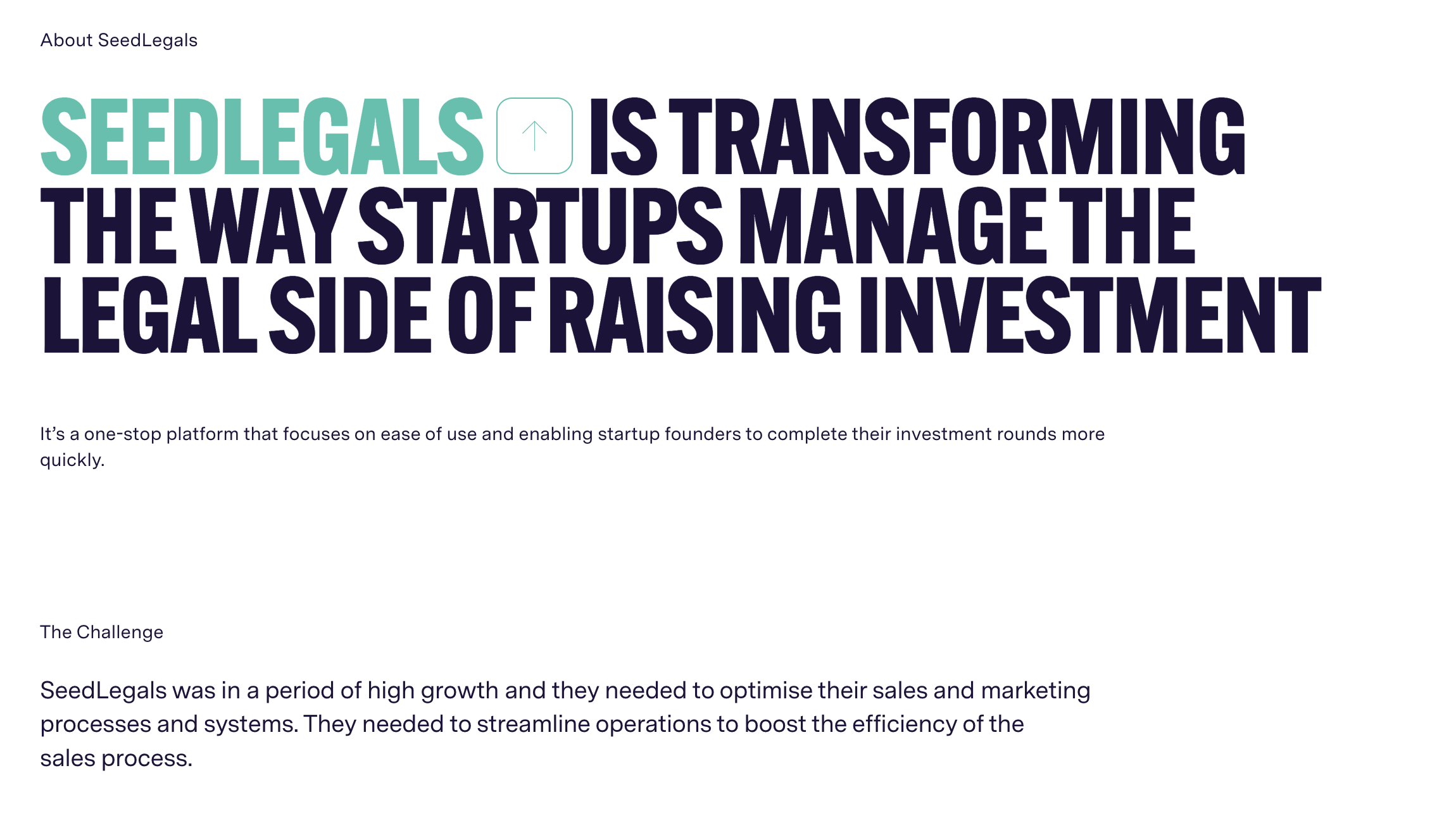
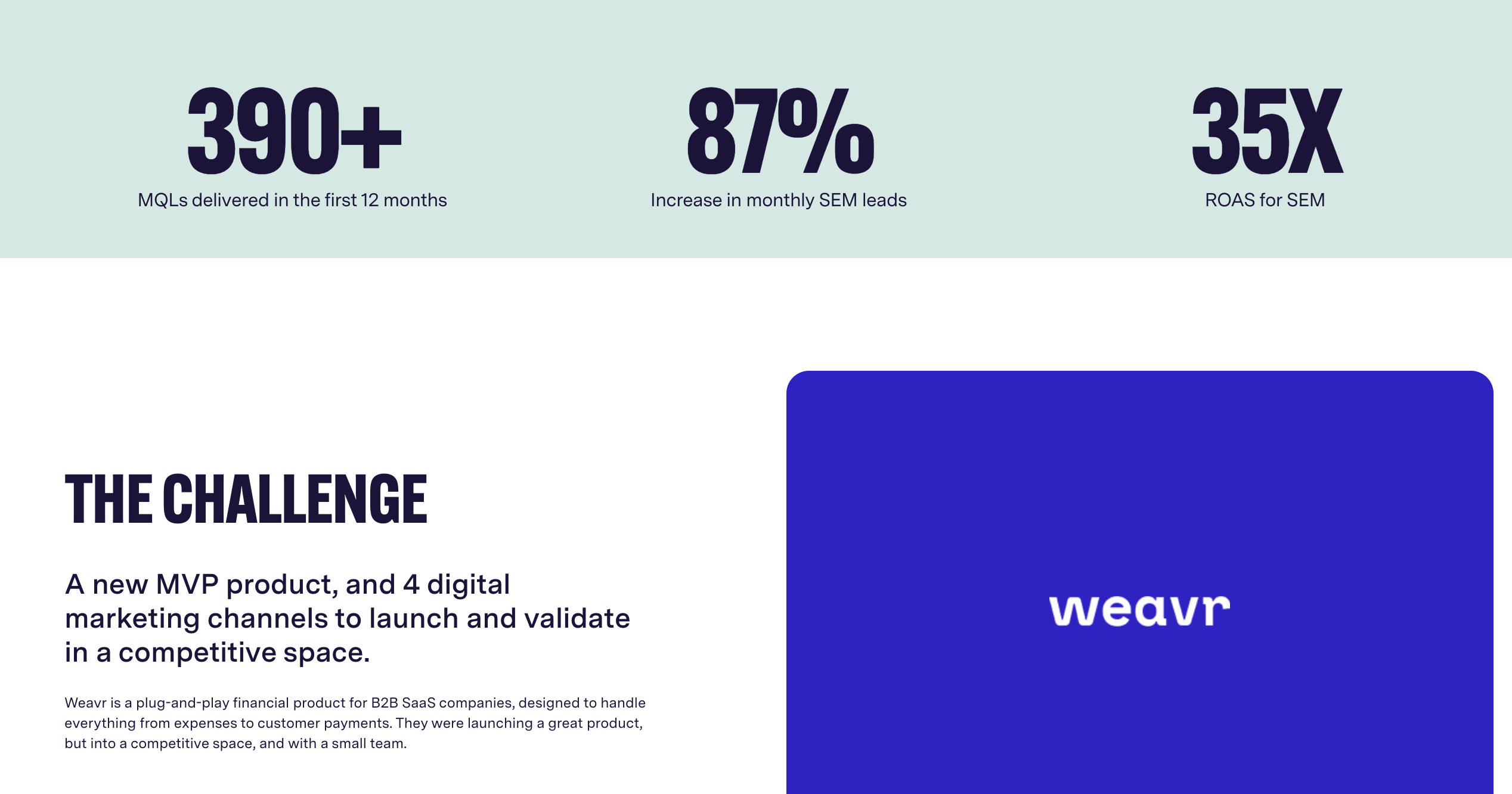
The extra detail and additional sections made the case studies pretty long. Given that our case studies are a key asset for sales conversations, we definitely didn’t want to fall into the trap of optimising for LLMs at the expense of the user experience.
With this in mind, we made the design of these pages more dynamic and visual, and added a single summary line for each section, making them easier for curious prospects to skim and scan:
Adjusting our homepage
We’ve periodically tested new wording on our homepage to better align with what prospects are actually searching for with AI platforms. Obviously, this is also a bigger positioning question, and not something to change on a whim – but for us it made sense.
Increasing our blog content production
We scaled our blog content production across two key types of posts:
1. Listicle comparison pages
While LLMs don’t tend to pay much attention to self-featuring comparison blog posts, the same isn’t necessarily true for answer engines. We’ve seen some real success by writing niche posts that compare the best/top growth marketing agencies for a specific case, such as being London-based.
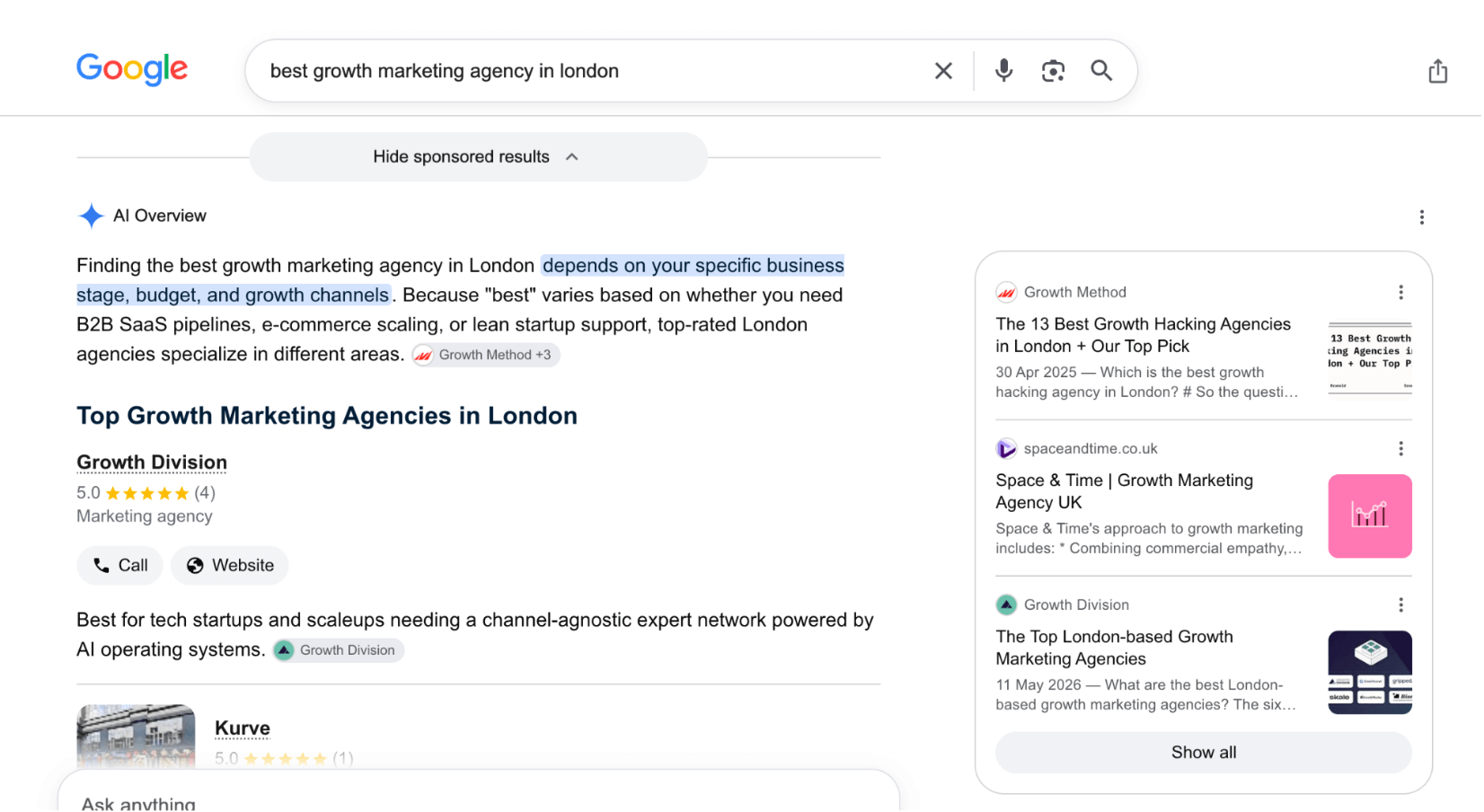
Some key considerations when writing comparison pages:
- Keep it classy. Each agency has genuinely different strengths, and we’ve aimed to bring those out in the post, positioning them as equally good alternatives. It’s not a question of just placing Growth Division as the automatic top choice.
- Make it citable. See the part that’s been quoted in the screenshot above? You want sharp, answer-focused sentences that are clear and easy for these platforms to lift.
- The author matters. Google uses a framework called E-E-A-T (Experience, Expertise, Authority, Trust) when deciding which pages to rank above others, and the same principles apply here. A page clearly authored by an experienced startup and agency co-founder should perform better than the same post published without clear authorship on the same website.
These pages have become some of our most cited:

2. Informational pages
We’re seeing a lot of success with getting our comparison listicles cited. Now, we’re refocussing on creating more citable informational content to put our name on the radar of prospects who are sitting higher up the funnel. For example, they might be asking LLMs to explain what growth hacking is, or give examples of the Bullseye Framework in action.
We used content gap analysis data from Airefs to create this plan of ‘hub & spoke’ content built around our most promising topic areas.
- Hub content = A large, cornerstone guide covering an overarching topic (high-volume keyword) in detail.
- Spoke content = Shorter posts targeting long-tail keywords (with lower search volume) within this topic.
For us, those areas have included themes like growth marketing and SaaS marketing frameworks.
We’ve developed a Claude skill which we use to help us draft these posts, but we keep a content expert in the loop to check and improve them.
We’re aiming to publish around 5 of these types of posts per month. It’s important not to flood your site with too much new content at any given time, or you risk Google’s algorithm penalising you for creating ‘unnatural’ content. Steady and consistent is better.
What we’re focusing on next
As well as doubling down on the ongoing activities above, we have a couple of new focuses for the quarter ahead:
Systemising content refreshes
The numbers quoted vary, but there seems to be a unanimous consensus: content freshness is somewhat important for SEO, but it’s essential for GEO.
One site claims 76.4% of pages cited by LLMs had been updated in the previous 30 days. A commonly shared stat is that 50% of cited content was published in the last 13 weeks.
We have over 200 blog posts on our website, and plans to publish many more over the next few months. What we don’t yet have is a system for refreshing and updating old content that could benefit from new data and more up-to-date information. Building out this process is a focus for the next quarter.
Fixing our blog page design
Our comparison listicles are proving valuable for bringing people to our site. But for people already on our site, there are more interesting posts we could show them (like this one!).
Our blog currently displays posts in order of publish date alone, so the content someone sees when landing on our blog isn’t as curated as we’d like it to be. Watch this space.
🎯 If you have any questions about our GEO strategy, or you’re looking for fractional, multi-channel support for your business, book a discovery call.
Want this run for your brand? We now offer it as a service: see generative engine optimisation (GEO) at Growth Division.



.png)
.png)