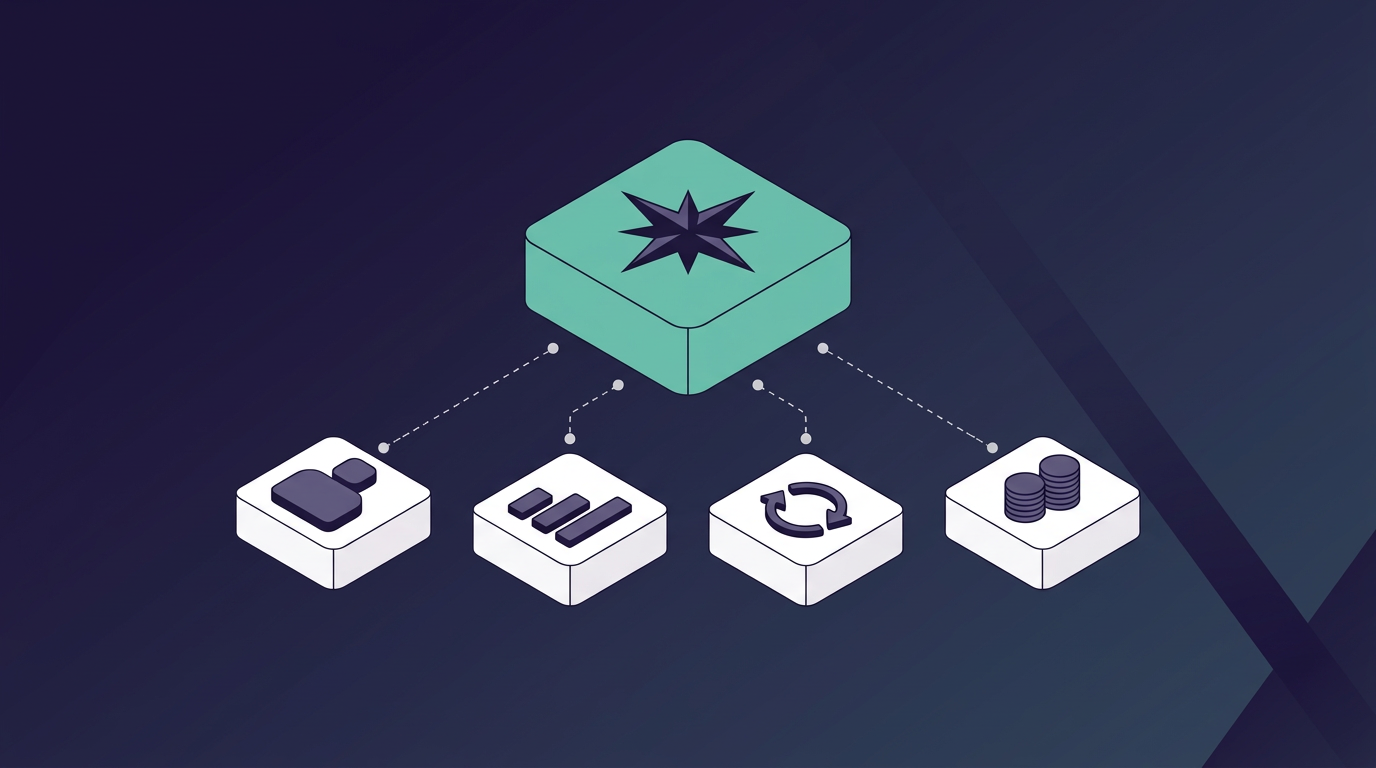
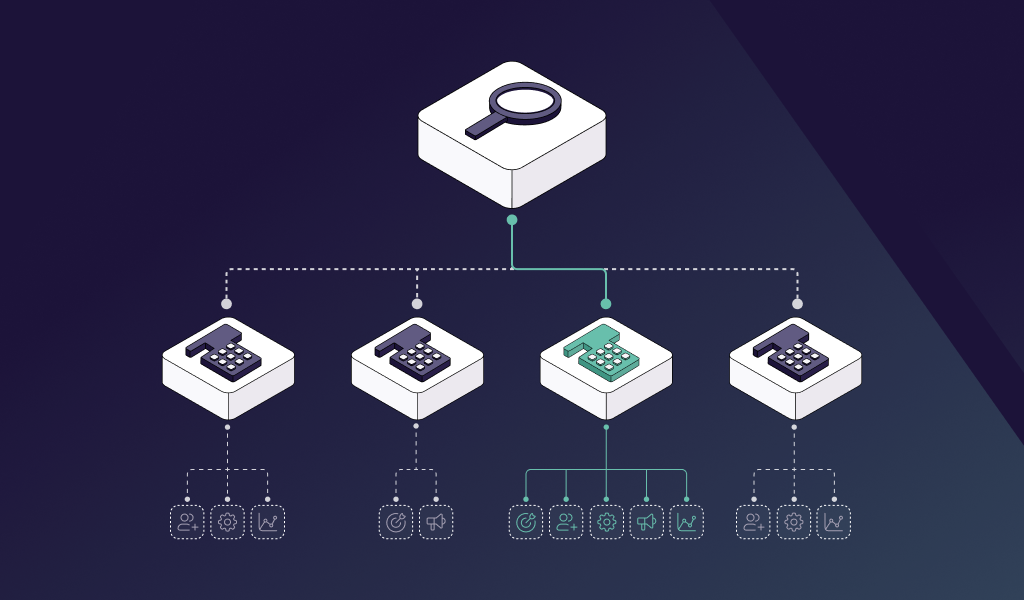
B2B marketing budgets are split between two different problems. Demand creation builds awareness in buyers who aren't searching yet. Demand capture converts intent that already exists.
Startups routinely underspend on creation and overspend on capture. They run paid search to reach active searchers, while doing little to attract buyers who aren't. A B2B demand generation agency fixes the first problem, but only if you choose the right one.
This guide gives you a framework for evaluating B2B demand gen agencies before you sign. We'll cover what demand gen actually means and what these agencies actually do. The five criteria separate genuine demand gen partners from channel agencies wearing the label.
What B2B demand generation actually means
Demand generation and lead generation are not the same thing. Confusing them leads to hiring the wrong agency, building the wrong strategy, and measuring the wrong metrics.
Lead generation captures intent that already exists. A buyer searches your category, clicks your ad, fills in a form, and you capture their intent. It's fast to measure, but it only works when buyers already know your category exists.
Demand generation creates intent. It's the activities that put your brand in front of buyers before they're searching. Content, thought leadership, SEO, social proof, and paid channels targeting non-searchers all build demand.
Here's the practical test. If you asked 100 people in your Ideal Customer Profile (ICP) whether they'd heard of your company, would any say yes? If not, you have a demand generation problem before you have a lead generation one.
Spending more on capture channels won't fix a top-of-funnel deficit.
A true B2B demand generation agency works both sides of that equation. They build the conditions that generate intent, not just the mechanisms that capture it. Most agencies wearing the label focus almost entirely on capture, and that distinction is worth testing early.
What good B2B demand gen actually looks like
Before evaluating agencies, it helps to know what a full-funnel demand gen programme includes. Most agencies cover only part of this picture.
Content and thought leadership
Content builds demand by educating buyers before they're in the market. Blog posts, case studies, research reports, and webinars all serve this function. For B2B companies with longer sales cycles, content is often the primary driver of top-of-funnel demand.
The distinction that matters: content that captures demand (how-to guides, comparison posts, and high-intent SEO) differs from content that creates it (original research, category-defining frameworks, and contrarian takes). The best demand gen programmes include both, and know the difference between them.
Paid demand creation
Paid media in demand gen operates differently from paid media in lead gen. In lead gen, paid drives traffic to capture pages for active searchers. In demand gen, paid reaches audiences who aren't searching yet.
LinkedIn Ads, content amplification, and programmatic advertising can all function as demand creation channels when set up with the right objectives. A demand gen agency knows that optimising these channels for immediate lead volume often undermines their demand creation function.
Account-Based Marketing (ABM)
For B2B companies with a clearly defined ICP, ABM targets specific accounts with co-ordinated campaigns across channels. It's a demand generation approach that prioritises depth of engagement over volume of contacts.
ABM requires clear ICP definition, tight alignment between marketing and sales, and a longer measurement horizon. Agencies that run ABM properly understand this. Agencies that treat it as uploading a list into a display ad platform do not.
Brand and category building
The longest-horizon demand gen activity is brand building. It's also the hardest to measure and the most frequently cut. B2B buyers buy from brands they recognise, and brand recall reduces cost per acquisition over time.
A demand gen agency that only talks about near-term pipeline isn't thinking about the full picture. The best ones balance short-term targets with the brand-building that makes every downstream tactic more efficient over time.
Five criteria for evaluating B2B demand gen agencies
1. Full-funnel thinking, not single-tactic
The clearest signal of a genuine demand gen agency is how they frame your problem in the first conversation. An agency that immediately proposes a paid media strategy hasn't asked enough questions yet. One that asks about your current content output, brand awareness, and top-of-funnel activity before recommending anything is thinking full-funnel.
Ask directly: "What's your view of the balance between demand creation and demand capture at our stage?" The specificity of the answer tells you whether they understand the distinction or are collapsing it into one thing.
2. Attribution capability
B2B demand generation is notoriously hard to attribute. A buyer might read your blog posts, see your LinkedIn ads, attend a webinar, and convert via branded search months later. Last-click attribution gives all the credit to the search ad, which is misleading and causes chronic underinvestment in demand creation.
A strong demand gen agency understands multi-touch attribution and the concept of the dark funnel, the research buyers do before they ever fill in a form. Ask how they measure demand creation activity. If the answer is "we track form fills," they're not solving the attribution problem; they're ignoring it.
3. ICP specificity and depth
Demand generation is only as effective as the ICP it's built around. Generic programmes aimed at "B2B companies" produce generic results. Strong demand gen agencies pressure-test your ICP before building any content or campaign strategy around it.
Ask to see how they'd approach ICP definition. A strong answer involves firmographic data, buying committee mapping, and trigger signals. A weak answer is "we'd target decision-makers at mid-market SaaS companies."
If you want to pressure-test your own ICP before those conversations, Scalelist's ideal customer profile template walks through the fields to define, with worked examples for B2B verticals.
4. Content quality and originality
Most B2B content is indistinguishable from everyone else in the category. That's a demand creation problem, not a volume problem. Demand is built by content that teaches buyers something new, takes an unexpected position, or provides data they couldn't find elsewhere.
Ask agencies for examples of content that created measurable demand, not just ranked for a keyword. Look for proprietary research, original frameworks, and positions with a genuine point of view. Generic content ranks, but original content builds demand.
5. Pipeline-connected reporting
Demand generation activity should connect to pipeline metrics, not activity metrics. Marketing Qualified Leads (MQLs), Sales Qualified Leads (SQLs), pipeline influenced, and cost per opportunity are the right leading indicators.
Ask specifically: what does a monthly report contain? How do you separate the pipeline your demand gen programme creates from demand that would have existed anyway? Agencies that can't answer the second question don't have a measurement framework; they have a reporting template.
Questions to ask before you sign
These questions are specific to B2B demand gen. They'll tell you more than any pitch deck will.
“How long does your demand gen programme take before producing pipeline?”
A realistic answer acknowledges the lag between demand creation and pipeline contribution. Top-of-funnel demand gen typically takes three to six months to show measurable pipeline impact. An agency promising significant pipeline in the first 30 days is describing demand capture, not demand generation.
“How do you measure dark funnel activity?”
If they don't know the term, move on. If they have a methodology for tracking it, including content downloads, webinar attendance, and direct traffic trends, they're thinking about demand gen accurately. Most agencies only measure what happens inside their campaigns, but a strong demand gen agency measures what happens before a buyer ever engages directly.
“How does your content team approach ICP research?”
You want to hear about customer interviews, sales team collaboration, and win/loss analysis. If the answer is "we do keyword research," they're building content for search engines, not for demand creation. These are related but not the same thing.
“What channels do you actively recommend against at our stage?”
A strong agency has opinions about what won't work. Those opinions should be grounded in your stage, ICP, and competitive landscape, not generic B2B assumptions. An agency that finds something to rule out shows they're thinking strategically, not just selling their services.
What to watch out for: red flags worth treating as disqualifiers
They guarantee specific lead volumes before understanding your business.
Specific results require specific context. Without understanding your ICP, existing content, and current market position, a lead volume guarantee is a closing tactic, not a strategic commitment.
They recommend a channel in the first call without asking about your funnel.
If the first conversation ends with a proposal for LinkedIn Ads, they're selling a channel, not doing demand generation. A demand gen agency should ask far more than they recommend in the first call.
They measure success with vanity metrics.
Traffic, impressions, and follower counts are outputs of activity. The right agency measures pipeline contribution, CAC, qualified demos booked, and revenue influenced. If the first monthly report leads with reach figures, ask what that reach translated to in revenue terms.
They resist a short initial engagement or pilot.
Strong agencies are confident in their process. That confidence shows up in flexible terms, not in 12-month lock-ins before any results are visible. A 90-day pilot with defined KPIs is a reasonable ask, and resistance to it is a red flag.
What good B2B demand gen looks like in practice
Set realistic expectations before you evaluate an agency's performance. Demand generation has a longer feedback loop than demand capture, and timelines need to be agreed upfront.
In the first 30 to 90 days, expect increased content output, improved ICP targeting, and a measurement framework being built. Early signals appear in brand search volume, direct traffic, and content engagement. Significant pipeline contribution isn't expected yet.
From months three to six, content should be building an audience, paid demand creation should influence pipeline attribution, and early category awareness indicators should be visible. Pipeline-influenced metrics should start to appear, even if deals haven't yet closed.
At month six and beyond, a well-run demand gen programme contributes measurably to pipeline, reduces CAC over time, and builds a content library that compounds in value without proportional spend increases.
At Growth Division, our growth marketing agency, every engagement starts with ICP alignment and channel hypothesis before any content or campaigns go live. That foundation prevents demand gen spend from landing in the wrong channels or reaching the wrong buyers. Our work with Weavr, for example, produced 175+ MQLs and an 87% increase in SEM leads within the first engagement phase.
Results like that come from demand creation and demand capture working in coordination, not separately.
Frequently asked questions
What's the difference between B2B demand generation and B2B lead generation?
Demand generation creates awareness and intent in buyers who aren't actively searching yet. Lead generation captures intent that already exists. Most B2B companies need both, but they require different tactics, different channels, and different measurement frameworks.
Treating them as interchangeable leads to chronic underinvestment in the activities that fill the top of funnel over time.
The practical consequence is predictable. Paid lead gen campaigns produce diminishing returns as the audience of active searchers gets exhausted. The fix isn't a higher bid or a new ad creative.
It's building more demand upstream so there are more active searchers to capture. A demand gen agency addresses that upstream problem. A lead gen agency doesn't.
How long does a B2B demand gen programme take to show results?
Demand creation has a longer feedback loop than demand capture. Content, ABM, and brand programmes typically take three to six months to generate measurable pipeline impact. Leading indicators appear sooner: rising direct traffic, improving content engagement, and growing brand search volume.
An agency promising significant pipeline in the first 30 days is describing lead gen. If you need near-term pipeline alongside demand gen, run both in parallel from the start, with demand capture as the short-term lever.
How should I attribute revenue to demand generation activity?
Multi-touch attribution models are more useful than last-click for demand gen. First-touch gives credit to the demand creation activity that introduced the buyer. Linear attribution distributes credit across every touchpoint in the journey.
The most accurate approach combines intent data with self-reported attribution, which means asking buyers directly how they first heard of you. A demand gen agency that can't discuss attribution models beyond form fills isn't measuring demand gen accurately.
Should I run demand generation and demand capture simultaneously?
Yes, for most B2B companies at seed to Series B stage. Demand capture (paid search, retargeting, high-intent SEO) produces near-term pipeline while demand gen builds over time. The risk of sequencing them is generating awareness with no conversion mechanism.
Run both in parallel, with heavier allocation to capture initially and a growing investment in demand creation as the programme matures. The capture layer becomes more efficient as the demand layer builds the brand awareness that lowers cost per click and cost per lead.
How much should a B2B demand gen agency cost in 2026?
For a seed-stage startup, a realistic starting budget is £5,000 to £10,000 per month for a growth team covering strategy and channel execution. Below that range, you're typically getting either strategy without execution, or execution without strategic direction. At scale, budgets between £10,000 and £30,000 per month are common for full-funnel programmes covering content production, paid demand creation, and ABM.
Growth Division operates at this price point, with a 4.7/5 rating on Clutch from 31+ verified reviews across 130+ tech startups. The pricing case isn't that demand gen agencies are cheap, it's that the right one produces outcomes per pound that justify the investment. The wrong one produces activity that doesn't compound.
What should I look for in an agency's contract before signing?
Look for three things: the exit clause, asset ownership, and reporting cadence. The exit clause tells you how easy it is to leave if results don't materialise. Asset ownership confirms that all content, ad accounts, and creative belong to you, not the agency.
And a defined reporting cadence tied to pipeline metrics confirms they're accountable for outcomes, not just activity. An agency confident in its delivery will give you favourable terms on all three.
Conclusion: Demand gen is a system, not a campaign
Choosing the right B2B demand gen agency starts with understanding what demand generation actually is. It's not a campaign you run. It's a system that builds the conditions under which buyers come to you already half-convinced.
The five criteria in this guide filter for agencies that understand this. Full-funnel thinking, attribution capability, ICP depth, content quality, and pipeline-connected reporting separate genuine demand gen partners from channel agencies wearing the label.
If you're building a demand gen programme for a tech startup and want an experiment-led, channel-agnostic approach, talk to Growth Division. We'll map your channels and ICP before recommending a single tactic.



.png)
.png)