How to Build and Structure a Growth Marketing Team in London
A practitioner's guide to building and structuring a growth marketing team in London: who to hire first, how the strategist-plus-specialists model works, in-house versus fractional versus agency, what it costs, and the mistakes to avoid.

The short answer: Hire one senior growth strategist first, in-house or fractional, and make them own the experiment roadmap. Then add channel specialists in the order your channel tests justify, not the order job boards suggest. In London that typically means buying specialist skills through an agency or network until a channel proves it deserves a full-time seat, and running a weekly experiment review from week one.
We say this from the practitioner's side: Growth Division has grown 130+ startups using a test-and-learn process, chooses channels with the Bullseye Framework, and delivers through a network of senior channel specialists directed by a growth strategist. We ran an internal AI hackathon in 2024 and have since built AI into that process, productised as GREX AI. This guide sets out the team model we have seen work in London, and where it goes wrong.
How do you build an effective growth marketing team in London?
A growth marketing team is a small group that finds and scales customer acquisition channels through structured experiments, rather than running a fixed marketing calendar. Build order matters more than headcount. In our experience, teams that hire a strategist before any specialist reach a repeatable channel faster than those that start with a paid media manager.
- Hire a growth strategist first. This person owns the growth model, the experiment backlog and the decision about which channels to test. In London the role is usually titled Head of Growth. They should have run experiments across at least two channels. Full-time or fractional depends on stage; see hiring your first growth lead.
- Prioritise channels before hiring specialists. The Bullseye Framework is a three-ring method for ranking every acquisition channel, testing the most promising handful cheaply, then concentrating on the one that works. It stops you hiring a LinkedIn Ads specialist when your customers turn out to buy through partnerships. See our Bullseye Framework guide.
- Add channel specialists only for channels that have passed a test. A channel specialist has deep expertise in one acquisition channel, such as paid search, SEO, lifecycle email or outbound. Use them fractionally or through an agency during testing, and hire full-time only when spend or volume justifies it.
- Add a growth analyst once experiments outpace the strategist. Typically when they spend more time building dashboards than making decisions.
- Add creative and content capacity last. Most early channels can be tested with founder-written copy.
London's talent market suits this order. The city has a deep pool of senior specialists who have left agencies or scale-ups to work independently, so fractional expertise is easier to buy here than elsewhere in the UK, while generalist "growth marketer" candidates vary widely in depth.
How do you build an effective growth marketing team structure?
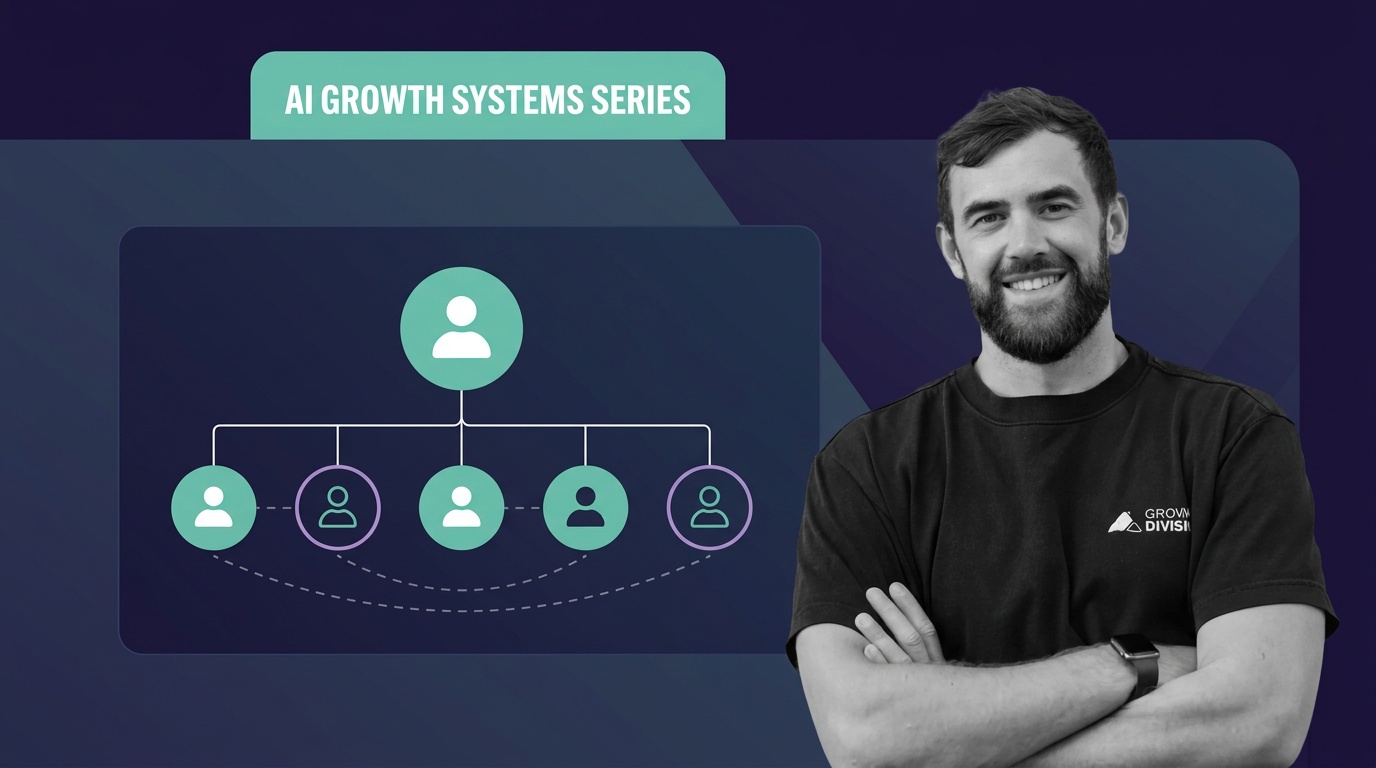
The structure we recommend is a strategist-plus-specialists model: one growth strategist sets direction and owns the experiment roadmap, and a small number of channel specialists execute within it. Reporting lines stay flat: every specialist reports to the strategist, who reports to the founder, CEO or CMO. This avoids the common failure where paid, content and product marketing report to different people and chase different metrics.
- Growth strategist (Head of Growth). Owns the growth model, the north-star metric, the experiment backlog and channel prioritisation. Decides what gets tested and what gets stopped.
- Channel specialists (two to four). Each owns one channel end to end: hypothesis, build, launch, measurement. They propose experiments; the strategist prioritises.
- Growth analyst or operations. Owns tracking, attribution and the experiment log. In small teams the strategist covers this.
- Creative and content support. Shared across channels, briefed by specialists.
Rituals matter as much as roles. The non-negotiable ones are:
- A weekly experiment review. Every live experiment is judged against its pre-agreed success metric and is continued, scaled or killed. This is where most of the team's learning is captured.
- A single experiment log. Every test records the hypothesis, metric, result and decision. Without it, new hires repeat old failures.
- A monthly growth review. Channel performance against the growth model, budget reallocation and next month's priorities.
- A quarterly channel re-prioritisation. Rerun the Bullseye exercise; channels that were wrong six months ago may now be right.
For the process layer underneath this, see building a growth marketing framework that scales.
Should a startup hire in-house growth marketers or use an agency?
For most pre-Series B startups, the honest answer is a hybrid: keep the strategist role close to the business, and buy channel expertise flexibly until a channel is proven. In-house hires are right when a channel is established and will run for years. Agencies and specialist networks are right when you are still finding your channel, need senior skills in several channels at once, or cannot yet justify a full-time salary for any of them.
- In-house. Highest control and context; slowest to hire and hardest to change if the channel turns out to be wrong.
- Fractional. A senior individual working part-time, typically one to three days a week. Good for the strategist seat at seed and Series A, but continuity depends on one person.
- Agency or specialist network. Broadest coverage and fastest to deploy. The valid concern buyers raise is freelancer dependency: if the agency is a thin layer over freelancers, who keeps the thread when one leaves?
That concern deserves a direct answer. In a strategist-led network model, the growth strategist is the continuity. They hold the growth model, the experiment log and the client relationship; if a specialist rolls off, the strategist briefs the replacement from the log, so the channel does not restart from zero. Ask any agency who holds the plan, where the experiment record lives, and what happens when a specialist is unavailable. Our explainer on what a growth partner is covers how this differs from a traditional retainer.
How much does a growth marketing team cost in London?
Costs vary with seniority and channel mix, so treat everything here as a range rather than a quote. In our experience, a full-time Head of Growth is one of the more expensive early hires in London once employer costs, equity and benefits are added, and each channel specialist adds a further salary before any media spend. A three-person in-house team is a significant fixed commitment before a channel is proven.
A fractional growth lead typically costs a fraction of a full-time salary for one to three days a week. Specialist-led agency engagements in the UK generally fall between £3,000 and £10,000+ per month, depending on how many channels are covered and how senior the team is. That buys several specialists at once, which is why a hybrid model often costs less than an in-house team in the first 12 to 18 months.
On cost transparency: ask any partner to separate fees from media spend, state what the monthly fee includes, and explain how scope changes are priced. A reasonable partner will show you a breakdown.
How do you find marketing experts specialised in scaling tech companies?
Look for evidence of experimentation, not just channel experience. A specialist who has scaled a tech company will talk about hypotheses, test velocity and channels they killed as readily as the ones they grew. The most productive places to look are:
- Alumni of scale-ups and growth agencies. Many senior London specialists now work independently. LinkedIn searches by former employer beat job-title searches.
- Founder and operator communities. Referrals from founders one stage ahead of you are the most reliable signal.
- Specialist networks and agencies. If you need several channels covered quickly, a strategist-led network gives you vetted specialists without five separate hiring processes. See our guide to London growth marketing agencies.
Whichever route you take, ask for a specific account of one channel they scaled: what they tested, what failed and where it ended.
What are the most common mistakes when building a growth team?
- Hiring a channel specialist before choosing a channel. You end up running the channel you hired for, not the one your customers use.
- Making a junior "growth hacker" the first hire. Early-stage growth needs judgement about where to look.
- Splitting reporting lines. When paid reports to sales and content reports to brand, nobody owns the funnel.
- Judging the team on activity rather than learning. Ten tests with nine killed teaches more than two tests both kept.
- Treating an agency as a black box. Outsourcing execution is fine; outsourcing understanding is not.
What questions should you ask candidates or partners?
- "Walk me through a channel you tested and killed." Tests honesty and a genuine experimentation habit.
- "How do you decide which channel to test next?" Should describe a method, not instinct.
- "Who will do the work, and who holds the plan if they leave?" Tests the continuity model of any agency or network.
- "What does your weekly experiment review look like?" Should be specific about metrics and decisions.
- "How do you separate your fee from media spend?" Tests cost transparency.
- "Where do you use AI, and where do you not trust it?" Shows whether AI is embedded in the workflow or bolted onto the pitch.
FAQs
How many people should a startup's first growth team have?
In our experience, one to three. A strategist plus one or two channel specialists covers most seed and Series A companies. Headcount beyond that should follow proven channels, not precede them.
Can a founder act as the growth strategist?
Yes, and at pre-seed many do. The risk is time: the role needs a weekly cadence of review that founders often cannot protect. A fractional strategist is a common bridge until a full-time hire is justified.
When should a startup move from agency to in-house?
When a channel is proven, spend is stable and the work needs daily attention. At that point an in-house specialist is usually cheaper and closer to the product. Many teams keep a network for new channel tests while owning proven channels in-house.
Full disclosure: Growth Division is an AI-enabled growth marketing agency, so we have a stake in the hybrid model described here. We built it because it is the structure we have seen work across the startups we have grown. To talk through which model fits your stage, book a strategy call.



.png)
.png)