Founders build growth marketing one campaign at a time. A LinkedIn push this month, a content sprint the next, a paid test whenever budget allows.
None of it compounds. Each campaign starts from zero. Nothing carries forward, and nothing gets judged against a system.
That's not a growth marketing problem. It's a framework problem. Startups that scale reliably aren't running better campaigns, they're running a better system.
What a growth marketing framework actually is
A growth marketing framework is the operating system behind your marketing activity. It's not a channel plan, a content calendar, or a list of tactics for the quarter.
It decides which channels get tested and how experiments get run. It decides who executes them, and how results feed the next decision. Without it, every channel choice is a guess wearing a strategy's clothes.
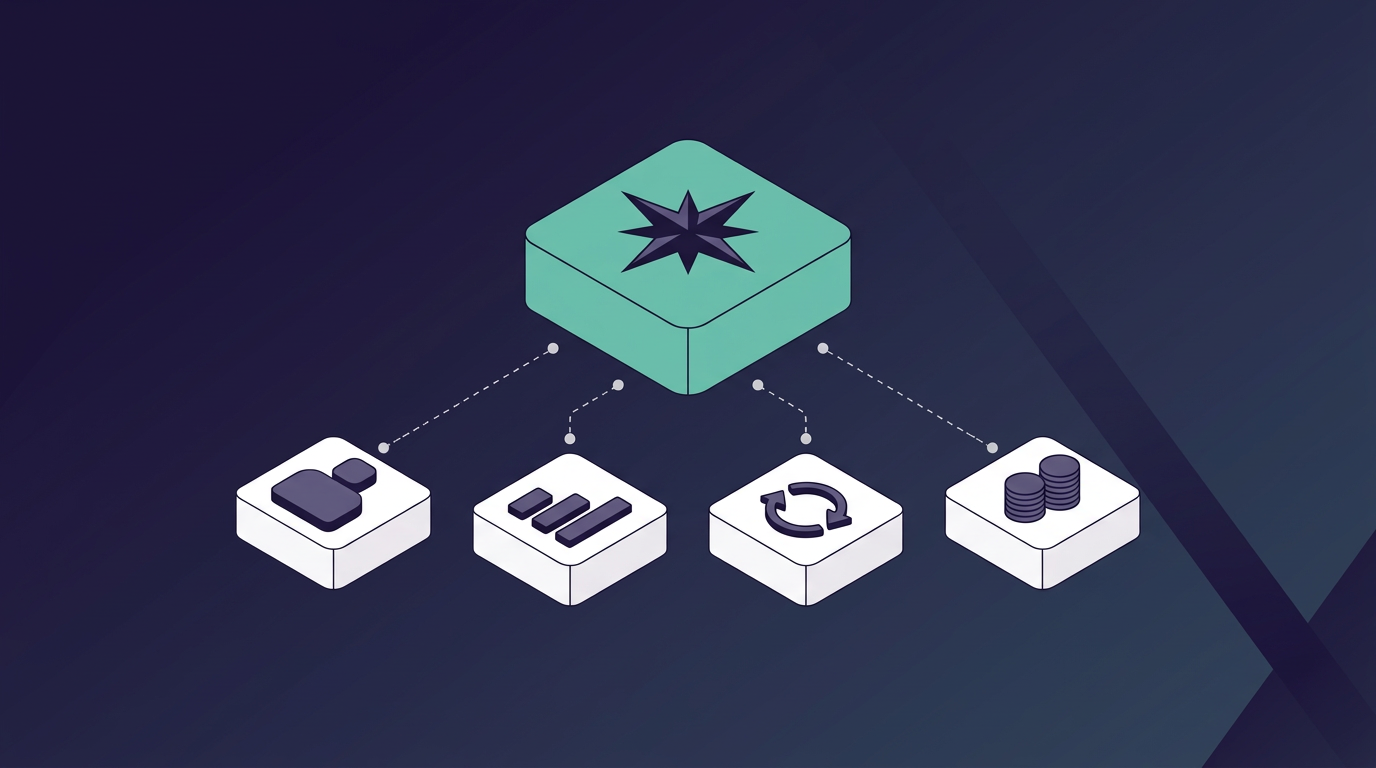
A real framework has four parts working together. Positioning defines who you're for and why they should care. A discovery process finds channels without bias toward any one of them.
A team structure flexes as the data changes. And an operating rhythm compounds knowledge instead of resetting to zero every quarter.
Miss one part, and the whole system breaks down. Even if the other three are strong.
Why most startups never build one
Three default paths lead startups away from a framework and toward ad hoc marketing instead.
Hiring in-house. You recruit for the skill you think you need today, paid media, say. Then the data says content would work better, and you're stuck retraining or rehiring.
That hiring cycle alone takes two to six months. Slow, when runway is finite.
Hiring a specialist agency. Agencies move fast, but they're built around one channel. A paid search agency will always tell you to run more paid search.
You get execution, not an unbiased read on what's actually working. The agency's incentive and your data can quietly point in different directions.
Hiring freelancers. Flexible and relatively cheap, but genuinely skilled growth freelancers are hard to find. Most people who claim to be experts on LinkedIn aren't.
You won't find out until the budget's spent. And by then, the lesson has cost you a quarter.
Each path optimises for one thing, speed, cost, or flexibility. It trades away the other two. A framework is what lets you get all three at once.
The five components of a growth marketing framework that scales
Here's what belongs in the system, roughly in the order it should get built.
1. Positioning before anything else
Before you rank a single channel, you need three answers. Who's your highest value customer? What specific problem do you solve for them? Why should they trust you over the alternative? These aren't branding questions, they're acquisition questions. Skip them, and every channel you test will underperform. The reasons will look like channel problems. They're usually message problems in disguise.
Ads that get clicks but don't convert. Cold email that gets opens but no replies. The pattern usually traces back to positioning, not the channel carrying it.
Get positioning right, and the same message travels across paid, organic, and outbound with only minor changes for format. Get it wrong, and no channel will save you.
Here's what that looks like concretely. "We help startups grow faster" is not positioning, it's a mission statement. "We help seed stage founders find their first scalable channel within ninety days of raising" is positioning, because a specific person can read it and know instantly if it's for them.
2. A channel-agnostic discovery process
Most founders pick a channel based on what worked for a company they admire. That's survivorship bias, not strategy.
A proper discovery process maps every plausible channel: paid media, content, SEO, email, outreach, partnerships, product-led growth. It ranks each one by potential for scale, cost to test, and speed to signal.
We call this the Bullseye Framework (originally built by Gabriel Weinberg and Justin Mares in the amazing book called Traction) at Growth Division, our growth marketing agency. We run it before any client starts execution.
3. A team structure that flexes with the data
This is where most frameworks fail. Founders build the strategy and the discovery process correctly, then staff it with a fixed team that can't adapt.
The fix is separating two roles. A channel-agnostic strategist owns the process, designs the experiments, and reads the data without bias. Then, channel specialists, paid media, SEO, content, email, execute inside whichever channels the data has validated. They rotate in and out as the evidence shifts.
Most in-house teams can't do this because they hired for one fixed skill set. Most agencies can't do it because they're built around one channel.
A fractional model keeps the strategist constant while specialists rotate. That flex doesn't require a new hiring cycle every quarter, and it doesn't require firing anyone either. The team simply changes shape as the evidence changes.
What this costs in practice is worth being specific about. A growth strategist typically runs £2,000 to £3,000 a month. A channel expert, paid media, content, SEO, runs closer to £1,000 a person a month.
A full growth team, one strategist plus two or three channel experts, typically runs £5,000 to £10,000 a month. That's roughly what an equivalent in-house hire costs before you've even validated a single channel.
4. A repeatable experimentation engine
A framework without an experimentation engine is just a strategy document. The engine is what turns strategy into evidence.
Every experiment needs four elements: a hypothesis, a metric, a timeline, and a kill threshold set before it starts. "If we run LinkedIn outreach to seed stage founders who've just raised, we'll generate ten qualified calls in thirty days, because our strongest clients match this profile" is a hypothesis. "Let's try LinkedIn" is not.
The kill threshold matters most, and gets skipped most often. Decide upfront what failure looks like, three qualified leads by week four, say.
That way you're not rationalising a failing test into month three. "It just needs more time" is a rationalisation, not a metric.
Run one variable at a time, and document every result, including the failures. A documented failure removes a wrong answer. A compounding archive of them is worth more than any single win.
5. An operating rhythm that compounds knowledge
The last piece is the cadence that ties everything together, weekly, not monthly. Review results against your north star metric every week. A quarterly review is too late to redirect spend. By then the budget's gone.
This is what an operating system like GREX is built to do. It pulls live metrics from tools like HubSpot and PostHog.
It scores each experiment's contribution to the north star metric. It surfaces what to scale or kill before the next sprint starts. You don't need AI to run this rhythm, but you do need the discipline. A spreadsheet and a standing weekly meeting work too, if someone actually owns them.
Without this rhythm, even good experiments produce isolated wins instead of a compounding system. The framework's whole value sits in the loop, not any single component.
What this looks like in practice
None of this matters as theory. A framework only proves itself once it's produced a result somebody can point to.
A few examples show the pattern, and they span different stages, different products, and different starting problems. What they share is the same underlying system.
Musiversal came in generating $100k in annual revenue. Twelve months of structured experiments and a consistent channel mix later, that figure was $1.2M, with 2,000 leads a month at a $30 cost per lead.
Weavr needed to validate its buyer personas before scaling spend. The framework generated 175+ marketing qualified leads. SEM leads increased 87%, and four buyer personas were confirmed along the way.
Addland was already running paid media, but inefficiently. A weekly review rhythm and disciplined testing cut monthly cost per acquisition by 26.5%, while paid spend increased elevenfold.
Lux Rewards ran the framework at a different kind of scale entirely. The result was 20 million cards linked, and £30 million in card links. Return on investment landed at 50,000%.
None of these results came from one lucky campaign. They came from a system that kept testing, scoring, and reallocating budget toward what the data actually supported. That's the difference a framework makes over time.
The three phases your framework moves through
A framework doesn't operate the same way from day one. It moves through three phases, and skipping ahead is the most common way founders break it.
Testing, months one to three. The goal here is signal, not revenue. Run small experiments across several channels, expect most to fail, and don't scale anything yet.
Channel clarity, months three to nine. One or two channels are now outperforming the rest. Tighten them, reduce customer acquisition cost (CAC), and formalise the messaging that's actually converting.
Scaling, month nine onward. You've found the channels and reduced CAC. Now you scale spend with confidence, while building the next channel in parallel, because depending on just one is fragile.
Trying to scale during the testing phase amplifies noise, not signal. Trying to keep testing everything during the scaling phase wastes budget you should already be committing.
Common mistakes that break the framework
A few patterns show up again and again in startups that build a framework, then quietly abandon it.
Skipping positioning to get to execution faster. Ads and outreach launch before anyone's agreed on who the message is for. Every channel underperforms, and the team blames the channel instead of the message.
Treating the strategist and the specialist as the same role. A generalist hire gets asked to both design the experiments and execute the paid media campaign. Neither job gets done well.
Reviewing results monthly instead of weekly. By the time a monthly review flags a failing experiment, a month of budget is already spent. Weekly reviews catch it in week two.
Scaling before reducing CAC. A channel converting at £200 CAC might convert at £80 CAC with two more months of optimisation. Scaling too early locks in the higher number.
Rebuilding the team every time the channel changes. A new hiring cycle every time the data shifts isn't flexibility. It's just a slower version of the same fixed team problem.
Letting the operating system become a reporting exercise. Dashboards that get built once, then ignored, don't compound anything. The value is in the weekly decision, not the dashboard itself.
Confusing activity with progress. Posting daily, sending hundreds of cold emails, and running several ads at once feels like momentum. Without a hypothesis and a kill threshold behind each one, it's just noise that happens to look busy.
Frequently asked questions
How is a growth marketing framework different from a marketing plan?
A marketing plan is a list of channels and campaigns for the quarter. A framework is the system that decides which channels deserve a campaign, and how you'll know if it worked.
How much should a startup budget for building this out?
There's no universal number. A workable starting range is £3,000 to £10,000 a month across strategy and two or three channel experiments. Spend enough to get a meaningful read, not enough to scale something unproven.
Do we need a framework if we already have paying customers?
Yes. Early customers usually come through founder networks, referrals, or luck, not a repeatable channel. What got you to your first £100k in revenue won't get you to your first million.
How long before a framework produces reliable growth?
Most startups move from testing to channel clarity in three to nine months, assuming the experiments are properly structured. Ad hoc testing without a framework routinely takes much longer.
Can one person run this whole framework alone?
Early on, yes, usually a founder or a fractional strategist handling positioning and discovery. Execution across multiple channels eventually needs specialists, which is why the team structure has to flex from the start.
What's the single biggest reason frameworks fail in practice?
Skipping the weekly review rhythm. Founders build the strategy, run a few good experiments, then let the operating cadence slip once things get busy.
We're pre-seed and pre-revenue. Is a full framework overkill?
Not the principle, just the scale of it. Start with lightweight positioning and one or two cheap experiments rather than a five-channel discovery process.
The four components still apply, hypothesis, metric, timeline, kill threshold, even at a £3,000 to £5,000 monthly budget. You're proving the model works before you fund it properly.
Should the framework look the same for a B2B SaaS company and a consumer product?
No. The components stay the same: positioning, discovery, team, experiments, rhythm. But the winning channels, and the north star metric itself, differ by business model.
A consumer app might live or die on paid social and activation rate. A B2B SaaS company might live or die on outbound and demo bookings. The framework finds the right answer for each, rather than assuming one.
What tools does a growth marketing framework actually need?
Fewer than most founders assume. A CRM to track pipeline, an analytics tool to measure activation, and a place to log results are the essentials.
Tools like HubSpot for the CRM layer and PostHog for product analytics cover most early-stage needs. An operating system like GREX adds automation on top, but the underlying discipline works with a spreadsheet too.
How to tell your framework is actually working
A few signals separate a real framework from a marketing plan wearing the label.
Experiments should be getting cheaper to run and faster to read over time. If every test still takes a month to set up, the operating rhythm isn't there yet.
Your team composition should be changing without a hiring headache attached. And your weekly review should be producing decisions, not just updates.
If the meeting regularly ends with "let's keep an eye on it," rather than "let's kill this" or "let's scale that," the kill threshold discipline has slipped. That's usually the first sign the system is drifting back toward ad hoc marketing.
One more signal worth tracking. CAC should be trending down inside a validated channel, not staying flat once you've moved past the testing phase. A framework that's actually working shows up in that number well before it shows up in revenue.
Conclusion: build the system, not just the campaign
A growth marketing framework isn't a bigger, more organised marketing plan. It's a different kind of thing entirely, a system that gets smarter every week instead of resetting every quarter.
Building it takes longer than launching your first campaign. But it costs far less in wasted spend, and it keeps compounding long after that first campaign is forgotten.
The founders who scale reliably aren't the ones who found a winning channel by luck. They're the ones who built a system that would have found it eventually, and kept finding the next one.
If you're a tech startup trying to build a growth framework that scales, we can help. You get it without the bias of a single-channel agency, or the overhead of a full in-house team. Growth Division, our growth marketing agency, runs the full process, from positioning through the Bullseye Framework to GREX-powered execution. Talk to the team about where your framework currently breaks down.



.png)
.png)