The first marketing hire a startup makes is almost always the wrong one. Not because the person is wrong. Because the role is. You hire a paid media specialist before figuring out if paid media is even the right channel. Three months later, the budget's gone and you're back to square one.
There's a better way to build a marketing team. It doesn't require a £115,000 Head of Marketing. It doesn't require a full-service agency retainer. And it doesn't require months of vetting freelancers who describe themselves as growth experts.
It's called a fractional marketing team. And if you build it right, it's the most efficient structure for a tech startup trying to find scalable channels.
What is a fractional marketing team?
A fractional marketing team is a group of specialists who work with your startup on a part-time or as-needed basis. Unlike a full-time hire, they're not locked into one role or one channel. Unlike a traditional agency, they're channel-agnostic, meaning they follow the data rather than the service they happen to sell.
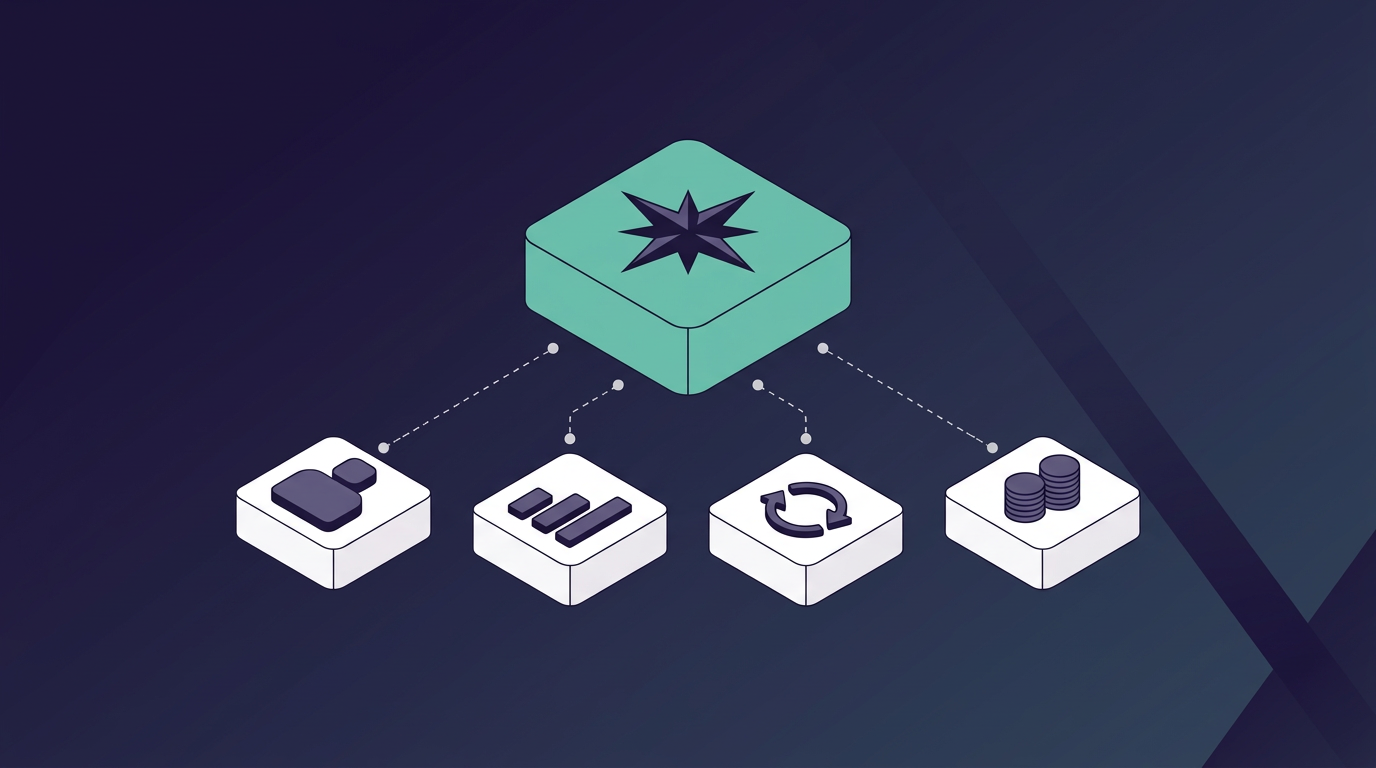
The model is built around the idea that early-stage startups don't need full-time marketers. They need access to the right expertise at the right time, swapped in and out as experiments produce results. A fractional paid media expert works on your paid campaigns until the data shows SEO is a better bet. Then the SEO expert comes in, and the paid media expert steps back.
According to the Chartered Institute of Marketing, 68% of UK businesses have considered or currently use fractional marketing. The model has grown significantly as founders learn the cost of getting their first marketing hire wrong. Fractional leadership adoption grew 245% over two years, with companies using it reporting 29% revenue growth versus 19% without it.
Why the alternatives don't work
Before building your fractional team, it helps to understand why the other options consistently underperform for early-stage tech startups.
The in-house hire. Hiring a Head of Marketing takes months, and you typically hire for the wrong skill set. When you need to shift channels based on experiment results, you can't. Fixing a bad senior marketing hire costs £115,000 to £225,000, according to SHRM.
The specialist agency. Specialist agencies are fast to start but they're structurally biased. A PPC agency will always tell you to run more PPC. A content agency will always tell you content is the answer. You're not getting strategy, you're getting a channel recommendation dressed up as strategy. The advice you get is shaped by what they sell.
The freelancer pool. Freelancers give you flexibility and speed. But the quality gap is significant. Most people who describe themselves as growth experts aren't. Vetting takes time, onboarding takes time, and when a freelancer underdelivers, there's no accountability layer to fix it. You're managing individual contractors while also trying to run a company.
The fractional team model solves all three problems at once. You get strategic direction without hiring a full-time CMO. You get channel experts without the bias of a single-channel agency. And you get the accountability of a structured team rather than a group of disconnected contractors.
The three layers of a fractional marketing team
A well-built fractional marketing team has three distinct layers. Most founders only build two of them. Missing the third is why so many fractional arrangements fail to produce consistent results.
Layer 1: The strategic layer
The strategic layer is a Growth Strategist or fractional Chief Marketing Officer (CMO) who owns the overall direction. Their job is not to run campaigns. Their job is to identify which channels deserve testing, design the experiments, and decide when to double down or cut.
Most startups skip this layer and hire channel experts first. The channel mix ends up decided by whoever's on the team, not the data. Only a channel-agnostic strategist will tell you when to stop spending on a channel.
At Growth Division, our growth marketing agency, the Growth Strategist runs the Bullseye Framework before any execution begins. It maps your target customer, their behaviour, and the most likely channels before a pound is spent. That's the sequence most agencies reverse.
Layer 2: The execution layer
The execution layer is made up of channel-specific experts: paid media, SEO, content, email, and outreach. These are the channels your strategic layer has identified as worth testing. These experts aren't permanent: they rotate in and out based on what the data shows each sprint.
The key is having a vetted network to draw from. Cold sourcing freelancers on platforms introduces quality risk every time. The best fractional teams draw from experts the strategic layer has worked with for years. Their skill level is already known. Their reliability is proven.
At Growth Division, we've built that network over years of working relationships. When an experiment signals SEO is the right next channel, we bring in a specialist we've already worked with. We're not starting from scratch with a cold hire every time the data shifts.
The execution layer should include a minimum of one to two active channel experts at any given time. That keeps costs manageable while maintaining enough coverage to run meaningful experiments across more than one channel simultaneously.
Layer 3: The operating system
The third layer is the one most fractional arrangements miss completely. It's the operating system tying the strategic and execution layers together. That means experiment tracking, sprint management, hypothesis generation, and shared reporting that keeps everyone coordinated.
Without an operating system, a fractional team is just a group of contractors working in parallel. Each runs their channel in isolation, reports on their own metrics, and has no shared view across the funnel. You end up with three separate performance reports and no way to compare them.
GREX is the operating system we use at Growth Division. It tracks experiments, manages sprints, generates AI-powered hypotheses, and gives the whole team a shared view of what's working. The result is a growth operation that compounds learning across every channel rather than running each one in a silo.
Building your own fractional team without a proprietary system? Approximate this layer with a well-structured experiment tracker, a shared sprint cadence, and a weekly review. The discipline matters more than the tool.
How to structure your experiments
The experiment layer is where most fractional marketing teams break down. They run activity, not experiments. The difference is a success metric and a hypothesis written down before the activity begins.
Every experiment in your fractional team should follow this structure:
- Hypothesis: what you believe will happen and why, e.g. "Running LinkedIn outreach targeting CTOs in fintech will generate 10+ qualified inbound requests per month because this ICP is active on LinkedIn and responds to peer-level outreach"
- Timeline: a clear duration, typically two to four weeks, short enough to generate signal without burning budget
- Success metric: a specific, measurable outcome defined in advance, e.g. 10+ qualified inbound requests, not "see how it goes"
Without a hypothesis, you can't learn from an experiment. Without a timeline, experiments run indefinitely and consume budget without producing data. Without a success metric, you can't tell the difference between a channel that works and one that just generates activity.
The sprint cadence matters too. We run monthly sprints at Growth Division, with a weekly check to catch anything clearly not working. That keeps the feedback loop tight enough to adapt quickly but long enough to generate meaningful data.
A monthly sprint follows a simple structure: hypothesis week one, execution weeks two and three, measurement week four. At week four, the decision is straightforward: double down, iterate, or stop. That structure is what turns activity into genuine learning.
The Bullseye Framework from Gabriel Weinberg's Traction is a useful starting point for deciding which channels to experiment on first. It's a structured process for ranking channels by expected impact, confidence, and ease before committing budget to any of them. We've adapted it at Growth Division to build a channel-agnostic GTM strategy that runs before any execution begins.
What does a fractional marketing team cost?
The cost depends on how many experts you're running and how many hours each one is working. Here's a rough breakdown based on our pricing model at Growth Division:
That's the cost of the team itself. Add to that the budget you'll put behind the channels being tested. A typical seed-stage startup needs at least £4,000 to £6,000 per month in channel budget, on top of team costs.
The comparison point that matters isn't the monthly cost. It's the cost per outcome. A fractional team at £9,000 per month costs far less than a £115,000 hire who validated the wrong channel.
The value case for fractional isn't lower cost than alternatives. It's better outcomes per pound spent. You're paying for an unbiased strategy layer, expert network quality, and an operating system that turns experiments into compound learning.
When fractional marketing is the right choice
Fractional isn't the right model for every startup at every stage. Here's how to assess whether it fits yours.
It's the right choice for seed to early Series A founders who have budget and haven't found a scalable channel. This describes most seed-stage and early Series A tech startups.
It's also right if you lack channel expertise in-house, or if you've been burned by a biased single-channel agency. It suits founders hiring a Head of Marketing who want to validate the channel mix first. That way you hire into a proven model, not a blank slate.
It's less suited if you're pre-product or pre-traction. A fractional advisor is a better fit than a full team at that stage. It's also less suited at Series B or beyond, where scaling a clear channel is better handled in-house.
The rough signal: if you know which channel works and need to scale it, you need execution capacity. If you don't know which channel works yet, you need a discovery process with a strategic layer running it. Fractional is built for the second scenario.
Building the team: practical steps
Getting a fractional marketing team right involves a few decisions that founders often underestimate.
Start with the strategic layer, not the execution layer. Most founders hire a paid media specialist first, but without a channel-agnostic strategist, that specialist will keep recommending paid media. Hire the strategist first, let them run a GTM process, and bring in channel experts based on what they find.
Vet before you need. The best fractional experts have full schedules. If you wait until you need someone to start looking, you'll hire whoever's available rather than whoever's best. Build relationships with potential experts before you need them.
The best networks are built over time, not assembled in a crisis. Ask peers who've used fractional models who they'd recommend for each channel. Most strong fractional experts come via referral, not via platforms.
Define the sprint structure before the first expert starts. Most fractional arrangements collapse not because the experts are bad but because there's no structure for coordination. Define how often experiments are reviewed and who owns the success metric. Decide what happens when an experiment fails before the first sprint begins.
Budget authority is the second thing to define. Decide who can pause a channel or reallocate spend before the first sprint begins, not after results come back.
Give it three to six months before drawing conclusions. The first one to three months of a fractional engagement are about establishing baselines and running initial experiments. Months three to nine are where reliable channels emerge. Drawing conclusions before three months have passed is the most common reason founders abandon a model that would have worked.
Frequently asked questions
How is a fractional marketing team different from a traditional agency?
A traditional agency is structured around a specific channel and will recommend it regardless of fit. A fractional marketing team is channel-agnostic. The strategic layer recommends channels based on experiment data, not on what the team sells.
Do I need a fractional CMO or a fractional growth team?
A fractional CMO is a single senior strategist who provides direction but typically doesn't bring execution capacity underneath. A fractional growth team is a full structure that combines strategic direction with channel-specific execution. If you need both thinking and doing, a fractional growth team is the right model. If you already have a capable junior team and just need senior strategic input, a fractional CMO may be sufficient.
How long does it take to see results from a fractional marketing team?
Months one to three are about building the model, running initial experiments, and establishing which channels show early signal. Months three to nine are where the first reliably scalable channels emerge. Most startups that stick with the model find a scalable channel that wouldn't have emerged through a traditional agency.
What's the biggest mistake founders make when building a fractional team?
Starting with the execution layer before the strategic layer is set. The channel mix ends up decided by whoever's on the team, not by a structured discovery process. The second most common mistake is not defining success metrics before each experiment begins.
Can a fractional team work alongside an in-house team?
Yes, and it often works better that way. An in-house team has deep product knowledge; a fractional team brings the channel expertise and strategic direction it lacks. The fractional strategist runs the experiment process while the in-house team manages product context and customer relationships.
Conclusion: The structure is everything
A fractional marketing team isn't just a cheaper version of an agency or a more flexible version of a hire. It's a fundamentally different operating model for finding scalable channels to market.
The model only works if all three layers are in place. A channel-agnostic strategic layer. A vetted execution layer. An operating system that ties everything together. Without the first, you get biased channel recommendations. Without the second, you get generalists pretending to be specialists. Without the third, you get contractors in parallel with no shared learning.
At Growth Division, our growth marketing agency, we've used this model with 130+ startups across the UK, US, and Europe. Every client gets a Growth Strategist who runs the Bullseye Framework, plus channel experts rotating in based on data. GREX tracks every experiment and sprint.
Start with a free Bullseye Call at Growth Division to see the model in practice. It's a structured GTM strategy session that maps the right channel mix before any budget is committed.



.png)
.png)