
Quora has over 400 million monthly visitors in 2026. For B2B brands, the more relevant stat is this: 60% of Quora's advertisers are B2B companies. The audience is professional, research-oriented, and actively looking for answers.
That's a different proposition from most social platforms. Quora readers aren't passively scrolling. They're asking specific questions about products, approaches, and comparisons.
The startup founder asking "what's the best demand gen approach for a seed-stage B2B company?" is a few steps from being someone's customer.
Unlike social posts that disappear in a feed, Quora answers compound. A well-written answer today can drive traffic and leads for years. Most brands write generic answers, include a link to their homepage, and wonder why nothing converts.
These ten tactics are how to do it properly.
What are the 10 ways at a glance?
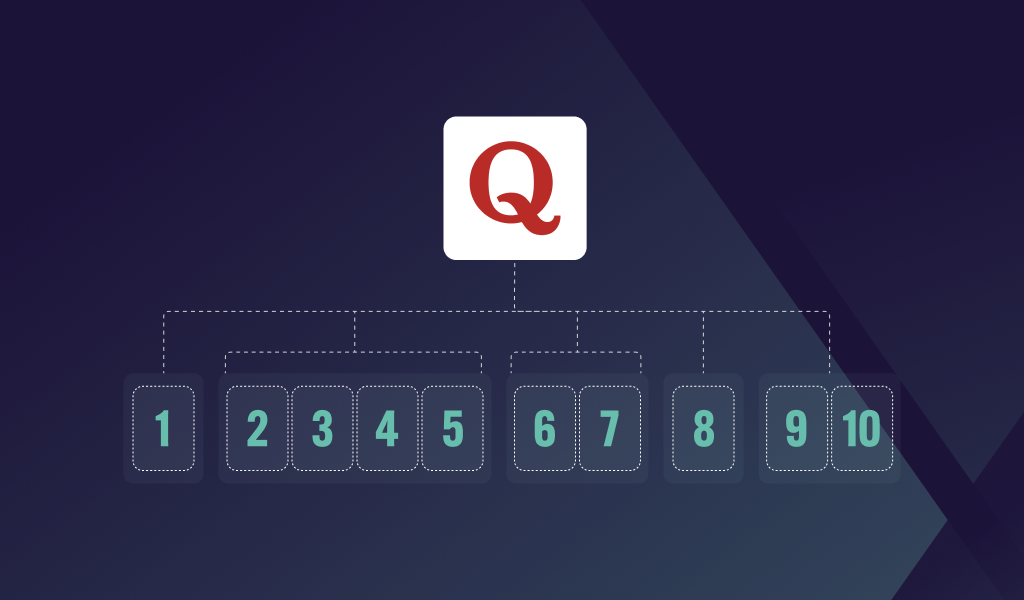
The ten tactics below cover the full Quora lead generation stack. That includes profile setup, question selection, answer quality, contextual linking, mobile formatting, Quora Spaces, paid amplification, and performance tracking.
Tactic 1 covers profile optimisation, because the profile converts readers into leads after the answer does its job. Tactics 2 to 5 cover question selection and answer writing. Tactics 6 and 7 cover link strategy and mobile formatting.
Tactic 8 introduces Quora Spaces as a community-building channel. Tactics 9 and 10 cover paid amplification and tracking, so you know what's working.
1. Build your Quora profile as a conversion asset
Most brands start answering on Quora before optimising the asset that converts readers into leads: the profile. That's the wrong order.
Your profile is the first place a curious reader goes after engaging with your answer. A blank or generic profile loses the lead. An optimised one does conversion work automatically.
A high-converting profile has three components. Your headline should state specifically who you help and what outcome you produce, not your job title. Your bio should link to a high-value resource: a guide, a free session, or a calculator, not a generic homepage.
And your credentials per topic should establish relevant authority for every category you answer in, since the credential displays directly under your name in every answer you write.
Pro tip: Quora lets you set a different credential for each topic. Use it. A credential like "B2B growth strategy, worked with 130+ tech startups" builds authority specifically where it counts.
2. Target questions in the buying intent zone
Not all Quora questions generate leads at the same rate. The ones that do cluster in the buying intent zone: questions where the asker is evaluating options, comparing providers, or looking for recommendations.
These questions follow recognisable patterns.
"What's the best [category] for [use case]?"
"What's the difference between [brand A] and [brand B]?"
"Is [approach] worth it?"
"What should I look for in a [provider]?"
Each signals a buyer close to a decision, which is the audience most likely to convert.
Informational questions build category authority but convert less. Spend 80% of your Quora time on evaluation and comparison questions. Reserve 20% for informational questions where you can demonstrate genuine expertise.
Pro tip: Search Quora for your category plus "vs", "best", "worth it", or "recommend." Filter by most followed questions to rank the highest-traffic opportunities first.
3. Answer questions early to maximise view velocity
Quora's algorithm surfaces answers based on view velocity, upvote rate, and recency. Answering early, before a question has accumulated many competing answers, gives your response the best chance of ranking at the top.
Find recently asked questions in your niche and answer them within 24 hours. Use Quora's search filters to sort by time (past day or past week) and target questions with high follower counts and few existing answers. High followers mean many people are watching for an answer.
Few answers mean limited competition for the top position.
Set up Quora Digest notifications for your target topics. This surfaces new questions automatically, letting you respond early without checking the platform manually each day.
Pro tip: The first image in a Quora answer becomes the thumbnail in search results and the Digest email. If you want your answer to stand out visually in a crowded thread, include a relevant, high-quality image as your first element.
4. Apply the Skyscraper Technique to outperform top-ranked answers
Most top-ranked Quora answers can be improved. They're often outdated, shallow on specifics, or missing context a buyer actually needs. That gap is an opportunity.
Read the top-ranked answer on a high-traffic question. Identify what's missing or outdated. Write an answer that's demonstrably better on every dimension: adding current data the existing answer lacks, providing a step-by-step framework where others offer vague advice, or sharing a real example that makes the answer tangible.
Better answers earn upvotes, which push your response above the existing top-ranked one. Don't try to win by writing more words. Write specifically better, with unique insight or a clearer framework.
Pro tip: Answers that open with an unexpected take ("Most brands approach this backwards, and here's why.") earn more upvotes than those confirming what readers already believe. The opening line determines whether a reader expands your answer at all.
5. Seed anonymous questions and answer them yourself
If the question you want to answer doesn't exist yet, create it. Quora allows anonymous question submission. You post the question without your name attached, then answer it under your own profile.
This works best for questions where you have a strong answer but no existing thread has been created. Common examples: questions about your specific category, comparisons involving your brand, or questions about problems your product addresses. The anonymous submission removes any appearance of self-promotion, since your answer reads as a community response.
Don't overuse this or apply it as a shortcut for promotional content. Use it selectively for questions where your answer adds genuine value to any reader who finds it. Quora moderation can remove questions that appear manufactured.
Pro tip: Phrase seeded questions from the buyer's perspective. "How do I find a growth marketing agency for a seed-stage B2B startup?" attracts real buyers. "What makes a growth agency worth hiring?" is too generic to generate qualified traffic.
6. Add links contextually, not as overt CTAs
The most common Quora mistake is treating every answer as a redirect to your website. Answers ending with "click here to learn more" or "book a call today" look promotional. They get downvoted and Quora moderation can collapse or remove them.
The correct approach is contextual linking, where the link helps the reader go deeper on a specific point. "I've covered this in more detail in a guide on the full channel testing framework [link]" is natural. "Visit our website to learn how we can help [link]" is not.
A practical rule: the majority of your links should point to third-party sources, data, or research. A minority, one or two at most, can point to your own content, and only when it's a logical next step for the reader. Omitting links entirely is also valid, and a detailed answer with no links often builds more credibility than one with multiple self-referential links.
Pro tip: Link placement matters. A link embedded mid-answer performs better than one at the end of a CTA paragraph. Readers engaged mid-read are more likely to click than those who've finished.
7. Format every answer for mobile readability
More than half of Quora's traffic comes from mobile. An answer written in long paragraphs is hard to read on a phone screen. Hard to read means high drop-off, and high drop-off means fewer upvotes.
Mobile-optimised Quora answers follow a consistent pattern: short paragraphs of one to two sentences, bold text on key points a reader might scan for, and numbered or bulleted lists for multi-step advice. The opening line carries the most weight, because Quora previews the start of each answer before the reader expands it.
Write your opening as if it's the only line a reader will see. Make it specific, direct, or counterintuitive. "Most Quora answers fail to generate leads because they target the wrong questions" is more compelling than "Quora can be a valuable channel for B2B companies if used correctly."
The opening earns the read. The body earns the lead.
Pro tip: Bold your most important claim in the first paragraph. It acts as a visual anchor for readers scanning before deciding whether to expand the full answer.
8. Join Quora Spaces to build category authority
Quora Spaces are communities built around specific topics, where members share content, ask questions, and engage in ongoing discussion. For B2B brands, Spaces offer a less competitive way to build visibility within a specific category before you've established a large following.
The difference from standalone answers: Spaces create recurring visibility. Members see new posts in their feeds repeatedly. That repetition builds brand familiarity over time, which is demand creation at a low cost per impression.
Find Spaces where your ICP is already present. Search for topics related to your category, your buyers' job functions, and the problems your product addresses. Join as a contributor, post original insight, share relevant content, and engage with members' questions.
The goal isn't promotion. It's to become a recognisable, trusted voice in a community your buyers already inhabit.
Pro tip: Creating your own Quora Space around a niche topic builds a captive audience of your ICP. A Space titled "B2B Growth for Seed-Stage Founders" attracts exactly the buyers a growth marketing agency wants to reach.
9. Amplify top organic answers with Quora Ads
Organic Quora answers and Quora Ads work well together. Identify your highest-performing organic answers, those with strong upvote counts and sustained view velocity on buying-intent questions, and amplify them with paid promotion.
Quora Ads let you promote specific answers to targeted audiences. Your organic answer, already validated by upvotes, reaches a paid audience that resembles the people already engaging with it. The social proof from upvotes adds credibility that cold ad creative doesn't have.
Start with a small test budget on your two or three highest-performing answers. Measure key metrics like cost per click and cost per lead. Allocate more budget to the answers producing the lowest cost per qualified lead, and use those results to inform where you focus your organic strategy next.
Pro tip: Quora Ads also allow targeting by question (showing ads alongside specific questions) and by interest topic. Topic targeting reaches users who've engaged with content in your category, even if they haven't yet asked a specific question themselves.
10. Track performance with UTM parameters to attribute leads
Without tracking, Quora is a black box. You'll see views and upvotes, but you won't know which answers are driving website traffic and which are producing leads.
UTM parameters solve this. Add UTM source, medium, and campaign tags to every link in a Quora answer or Ads campaign. This lets your analytics platform attribute sessions, signups, and conversions to specific answers, topics, or question types, using a simple convention: source=quora, medium=organic, campaign=[topic-slug].
Within a month, you'll have data on which answers drive qualified traffic, which topics convert, and which question types generate leads versus just views. Use that data to double down. Without this tracking layer, you're optimising by feel instead of by evidence.
Pro tip: Build a simple tracking log that records every Quora answer you publish: the question, its UTM tag, and its monthly view count. Review it monthly to identify which content types are compounding and which have flatlined.
Frequently asked questions
How many Quora questions should I answer per week?
Quality beats volume on Quora. Three to five well-researched, detailed answers per week will outperform 20 short, generic ones. Quora's algorithm rewards upvotes and sustained view velocity, both of which come from answer quality, not quantity.
Start with a consistent cadence you can maintain for at least 90 days. A Quora presence takes time to compound, and a high volume of low-quality answers early on can harm your profile's credibility with the algorithm.
What types of B2B businesses get the most from Quora?
Businesses with a clearly defined ICP and a specific problem their buyers actively research tend to see the strongest results. B2B SaaS companies, professional services firms, and consulting businesses do particularly well, because their buyers use Quora to evaluate options, compare providers, and find implementation guidance. Businesses selling commodity products or targeting very broad, undifferentiated audiences typically see lower conversion rates from Quora's organic channel.
Should I prioritise Quora Ads or organic answers?
Start with organic. Validate which questions your ICP is asking, and which answer formats earn upvotes, before spending paid budget. Once you've identified your top two or three organic answers, use Quora Ads to amplify them.
Paid budget behind proven content performs significantly better than paid budget behind untested content. The organic-first sequence also means your Quora Ads promote answers with existing social proof, which improves conversion rates compared to running cold ad creative.
How do I know which Quora answers are actually generating leads?
UTM tracking is the most direct method. Beyond that, check self-reported attribution from new leads ("how did you hear about us?") and look for Quora in your direct traffic and social referral sources in analytics. Answers that generate leads tend to follow recognisable patterns: buying-intent questions, contextual links to high-value resources, and formats that demonstrate specific expertise.
Once you identify a high-converting answer, model your future answers on its structure and framing.
Is Quora worth using for B2B marketing in 2026?
Yes. Quora's monthly traffic has grown consistently, reaching over 400 million monthly visitors in 2026. For B2B brands, the question format naturally surfaces buyers at specific decision points in their evaluation process.
Unlike social posts, Quora answers keep accumulating views for years. A single high-quality answer on a high-traffic question can drive leads long after it's first published, making the return on a well-written answer compound over time.
Conclusion: Quora rewards consistency and specificity
Quora isn't a quick-win channel. It's a compounding asset that rewards brands who show up consistently, target the right questions, and write answers good enough to earn upvotes.
The mistake most brands make is treating it like a broadcast channel, posting answers to every vaguely relevant question and measuring success by view counts. The brands generating real leads from Quora treat it like a precision tool: they target buying-intent questions, write specifically for the decision the reader is trying to make, and track which answers produce qualified traffic.
The tactics in this guide build that foundation. Target buying-intent questions, format for mobile, link contextually, track everything, and amplify what works.
If you're a B2B startup building a growth system that compounds across multiple channels, talk to Growth Division, our growth marketing agency built specifically for tech startups. We'll help you find the channels that move the needle and build the infrastructure to scale them.



.png)
.png)